Close Encounter with a Narcissist – Part 1 July 5, 2008
Posted by alwaysjan in Narcissistic Personality Disorder.Tags: Health, Life, Narcissism, Narcissistic Personality Disorder, NPD, Personality Disorders
trackback
When you’re used to writing with a humorous edge, there’s always the danger that when you have something important, albeit serious, to say, no one will take you seriously. I’m willing to take that chance.
I’m writing this because, first, I want to expunge any lingering demons from my own close encounter with a narcissist. Even more important, as an educator, I’d like to see information about Narcissistic Personality Disorder (NPD) become common knowledge. Can you remember back to when you first heard about ADHD or OCD? Even now, you might not know all there is to know (that’s what Wikipedia is for!), but at least you know these disorders are for real. So is NPD. There will be a quiz at the end. Hey, I’m a teacher, and I need to check for understanding.
When most people think of a narcissist, they picture someone obsessed with their physical appearance. “Mirror, mirror, on the wall…” I’d certainly never heard of Narcissistic Personality Disorder (NPD), a real-deal condition laid out in the DSM-IV. But being an experiential learner, I had to learn the hard way. Now I’m an armchair detective in the study of this condition, and I’m finally ready to talk.
I make no excuses for lacking medical or psychological credentials. Narcissists are an elusive breed, so you won’t find them in a therapist’s office embarking on a journey of introspection. When my husband was on jury duty, another potential juror was a therapist. When asked about NPD, the therapist sadly shook his head. “I’ve actually never seen a client with NPD because they’re convinced they don’t have a problem,” he said. “But they leave a high body count,” he added. “Their victims are the people who come to see me.”
No wonder. A close encounter with a narcissist can leave you doubting your own sanity. The victim, and there is a victim, is left shaking her head wondering, “What just happened?” (I’ll use the female pronoun since it’s believed that the 50-75 percent of those with NPD are men). Want to get those party guests who’ve overstayed their welcome to leave? Just start talking about NPD. If you try to explain the disorder to friends or family, they’ll look at you like you’re discussing alien abduction or as if you’ve grown another head.
I haven’t sprouted another head yet have I? Good. Because it’s highly likely you know someone who has NPD. Most likely, they’re flying under your radar. Narcissists make nice to people who are in the position to do something for them, or to people who just don’t have a speaking role in the grand production that is their life. Only those who dare to get emotionally close to a narcissist get to see them drop their carefully crafted social mask.
The DSM – Not A Summer Read
The Diagnostic Statistical Manual of Mental Disorders (DSM-IV) is a hefty tome and the handbook for mental health professionals. I once trekked to the public library to consult it, after I was told by a therapist that a mutual friend suffered from Borderline Personality Disorder. What on earth? I imagined someone teetering on the edge of sanity, in danger of falling overboard. When I finally read the diagnostic criteria for Borderline Personality Disorder, all of the pieces fell into place. There was my friend. I had to sit down to catch my breath. If only I’d kept reading, I would have learned about NPD as well.
My friend with NPD, I’ll call him Joe, entered my orbit through a shared common interest. He seemed intrigued by my enthusiasm and talent. In retrospect, I think he was most drawn to me because although I’m a natural talker, I can also be a good listener. He struck me as someone who needed to talk, but was socially awkward. Initially, I found this endearing. If there was a lull in the conversation, he’d blurt out the strangest comment that had nothing whatsoever to do with what we’d been talking about. I overlooked these gaffes or mentally made excuses for them. He’s obviously uncomfortable talking to women. He’s from a different culture. English is his second language. He had a difficult childhood. He’s just outspoken.
Then one day Joe said something so cruel to me, I can still feel its sting. My eyes welled up with tears. “What’s the matter?” he asked, still smiling. “Are we thin-skinned?” I realized he was relishing my discomfort. It was creepy. After he left, I replayed the encounter in my head. Then replayed it again. Maybe I’d read too much into it. Later, I would be angry that I didn’t listen to my gut instinct.
Two days later, Joe stopped by to talk. It was as though nothing had ever happened. When I tried to bring the subject up, he dismissed my concern with a wave of the hand, “Nobody got hurt,” he proclaimed. What an odd comment to make, I thought. It left a bad taste in my mouth. Then, based on a hunch, I googled “narcissism.” I discovered there was so much I didn’t know.
DSM–IV Criteria for Diagnosis of Narcissistic Personality Disorder
To make a diagnosis of NPD, at least five of the following nine behaviors must be evident.Remember that most narcissists are diagnosed in absentia since they’re loath to seek professional help. The comments in bold italics are mine.
1. An exaggerated sense of self-importance (e.g., exaggerates achievements and talents, expects to be recognized as superior without commensurate achievements) Think- Grandiosity accompanied by its sidekick Magical Thinking. He’s so full of himself, he’s convinced he can do anything.
2. Preoccupation with fantasies of unlimited success, power, brilliance, beauty, or ideal love. Think “The Secret.” My talents know no bounds!
3. Believes he is “special” and can only be understood by, or should associate with, other special or high-status people (or institutions) Think – I’m unique, therefore I’m misunderstood.
4. Requires excessive admiration Think – Look at me Mom! (Any woman can play the role of Mom.)
5. Has a sense of entitlement Think – That doesn’t apply to me!
6. Selfishly takes advantage of others to achieve his own ends Think – You’re just lucky I chose you to be of service to me, as spending time in my presence is reward enough.
7. Lacks empathy Think – It’s killing me to even pretend that I’m interested in your life or concerns. Your feelings make me feel uncomfortable so get over it!
8. Is often envious of others or believes that others are envious of him. Think-You have something I want. Can I borrow it so it can become mine?
9. Shows arrogant, haughty, patronizing, or contemptuous behaviors or attitudes. Think – All this time I just thought he was an @sshole!
Developmental Narcissism
Narcissism, itself, is not inherently bad and is even developmentally appropriate. Children until the age of six are naturally narcissistic. They’re inherently egocentric and “Mine!” is their mantra. This is normal. As children grow older, they become more aware of the needs of others. Prodded by their parents, they learn to share. They learn to take turns. Reluctantly, they relinquish the spotlight.
Adolescents are also prone to narcissistic behavior. “You can’t tell me anything I don’t already know!” punctuated with a slamming door. This kind of narcissism is remedied when real life smacks them with a dose of reality. Mom and dad sever the financial pipeline, or their boss doesn’t find it cute that they were late to work again. Adolescents don’t grow out of it. They grow up.
Many adults show narcissistic traits, which can render them fairly obnoxious at times. But that doesn’t mean they have NPD. If you’re wondering about some of your own less-than-admirable traits, that’s proof positive that you’re NOT a narcissist. Narcissists are convinced that they’re perfect just the way they are. It’s other people who have the problem. Other people, as in the rest of the world. You just need to accept them the way they are. But that’s your problem.
Personality Disorder vs. Mental Illness
How is a personality disorder different from mental illness? I had a hard time initially wrapping my head around this one. A mental illness (schizophrenia being the most widely known) can be treated, with varying degrees of success with medications or cognitive therapy. Most mental illnesses are caused by brain cell synaptic disruptions, most of which are believed to be genetic in origin. I have friends who are bipolar and as long as they take their meds, any symptoms subside and they feel and act relatively “normal.” Mental illnesses typically present themselves in late adolescence or early adulthood. The onset of the mental illness is often sudden and profound. A mental illness descends over a person’s personality like a heavy wool blanket feels on an already warm summer night.
A personality disorder, on the other hand, is all pervasive. The DSM-IV describes a personality disorder as “an enduring pattern of inner experience and behavior that deviates markedly from the expectation of the individual’s culture, is pervasive and inflexible, has an onset in adolescence or early adulthood, is stable over time, and leads to distress or impairment.”
With mental illness, a person’s personality is blanketed, or suffocated, by the onset of the mental illness. But the personality of someone with a personality disorder is virtually interwoven into every fiber of that blanket. Unravel the blanket and you unravel their personality.
So someone doesn’t have a personality disorder; they ARE the personality disorder. These personality traits are so deeply ingrained that they defy change. That brings me to Narcissistic Personality Disorder (NPD).
An Analogy
Calcutta, India has the highest population density of any city on Earth, most of whom live in wretched poverty. Because only central Calcutta is serviced by sewers, during the monsoon season, raw sewage floods the streets. Helping the poor of Calcutta was Mother Teresa’s life’s work.
I had a friend who spent most of his childhood in Calcutta. One day we were shopping and he asked me to tell him which cologne smelled the best. He claimed to have no sense of smell. I was incredulous. My friend said rather matter-of-factly that he’d lost his sense of smell when he lived in India. He didn’t seem to view this as any sort of disability, for this “loss” he said had spared him from smelling the stench of humanity in Calcutta.
Now, I lived in New York City for 11 years, so I know first hand that there are smells worse than death. I saw how one homeless man, passed out and simmering in his own juices, could empty an entire subway car during the peak of rush hour. Just a whiff of a decomposing rat could make me retch.
But though this “loss” protected my friend against the putrid odors of Calcutta, it also robbed him of the ability to enjoy the sweet fragrance of night-blooming jasmine, the crisp smell of fresh basil, or the garlicky preview of a dinner to come. It was all or nothing. A package deal.
Are you still with me? Because I’m going to ask you to take a big step now.
Picture a small child, totally dependent on his mother to meet his emotional needs. Now what if it’s not putrid odors that assault the child’s senses, but human interactions themselves? A neglectful, abusive, or even an indifferent mother who leaves the child constantly feeling emotionally adrift. Or a dominating mother who won’t allow the child to be himself.
Just like my friend, who “lost” his sense of smell, some children, as a coping mechanism to survive the pain of emotional abandonment, tune out the very people who are inflicting the injury. But again, it’s a package deal, because the child tunes out all other humans as well. It’s as though the child “loses” his sense of people. People in the sense that they are caring others. It’s a high price to pay, but it protects the child from future emotional hurt. The child’s immature True Self is “safe” behind a psychological mask. This mask is what’s referred to in psychiatry as the False Self. Unable to trust those who should be nearest and dearest, the child turns his attention to someone who will never abandon him – himself.
The False Self not only protects the child from further injury. It embodies everything the child is not. While the child is powerless and vulnerable, the False Self of the narcissist presents itself as all knowing and all powerful. But behind the mask of the False Self lies an injured child – an emotional embryo.
Now if you’re a caring person, at this point you probably feel sorry for this child. Don’t bother – it’s too late. The child doesn’t feel sorry for you. This poor little child is now an adult. And it’s time for the victim to become the victimizer.
After I learned about NPD, I continued to be Joe’s “go to” person for several months. I so wanted to be wrong. It was only with my newly gained knowledge that I was able to fully see him for what he was, or more importantly, for what he wasn’t.
But what about the quiz, you ask? Just answer one simple question. If it looks like a duck, walks like a duck, and quacks like a duck, it’s a _ _ _ _. Congratulations! You passed!
PART 2 The End Game of Devalue and Discard; Meet the Adult Narcissist; Humans = Things, Emotional Vampirism, and the answer to this analogy: As a CROSS is to a VAMPIRE; ____________ _____________ is to a NARCISSIST.
Click on the this link to read “Close Encounter with a Narcissist – Part 2″
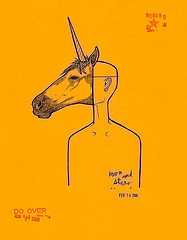
Photo credit: Unicorn Mask by Matty on flickr.


 planetjan
I get to be the first-
Wow, bravo Jan. You nailed it.
LikeLike
Hi Jan –
Fascinating story – everyone has difficult people in their lives, however, sometimes those people can have clusters of extreme traits that may meet personality disorder characteristics. I enjoyed your post and look forward to part 2.
If you want to dig into the subject further from a diagnostic standpoint, we have recently licensed a good chunk of the DSM-IV where you can read more about NPD here:
http://www.mindsite.com/dsm_iv/narcissistic_personality_disorder
July 2009 Note to readers – Although this link initially DID provide entire sections of the DSM-IV on-line, this is no longer the case. 😦 It now offers surveys to determine psychiatric/psychological problems for a fee. Jan
LikeLike
Jan,
Beautiful, clear writing as always. I would be interested in any stories you may have picked up from other people. I would be happy to share more of mine with you…there are unfortunately so many of them!
Please keep posting about NPD, you have a world of knowledge to share.
Wendy
LikeLike
I have been involved with a narcissistic man on and off for five years.I always felt that something had to be wrong with him mentally because of his weird behavior and most of all his coldness and lack of feeling toward people.this man hurts everyone that comes in contact with him including family members.I never understood how anyone could be so cold.I fell deeply in love with him and his ability to turn on and off drove me into a deep depression.The relationship was very emotionally draining and had me doubting my sanity and my womanhood.I am a successful woman and I have a lot of things going for me but his constant rejection took almost all of my self esteem.I could not understand how I could love someone who has nothing going for himself and who treated me like crap.When I typed in narcissism on the web and read the articles. It was like opening a door for me.I thought that narcissim was just a term used to describe a selfish person but now that I know that this person is sick I can move on and not look back.thank you lord!
LikeLike
Just read your post now, jan. Thanks for your great insights and honest sharing. We should all continue to share insights like this to help others deal with their NPD-afflicted counterparts. Countless emotional struggles are occurring due to this.
LikeLike
Jan-
You sound as though you had first hand experience with the door slamming and the “you aren’t the boss of me!”
This is a piece you should be proud of. It’s clear and concise. It brings tears to my eyes with the description of the child…before he/she became an N. That was my friend. I remember the stories he told me of the abuse he suffered. It is tragic, but there’s nothing I can do to help him ‘fix’ it.
LikeLike
my father was a classic narcissist.he was married to a woman (my mum) who all her life was, too, a narcissist. one of my brothers I fear is also. They undermine every achievement with a heart stopping accuracy and coldness that you are left to wonder your own sanity. They contradict themselves just to oppose an opinion you may have dared utter. As a child you are dependent upon their guidance,encouragement,world perspective. But as a child they train you to know that you are worthless (to them),but you must accept it and pretend that it is normal,so you question…. does every parent act like this,is everybody just ‘acting’ normal. I began to think and unfortunately hoped that all parents did hate their children and it was normal to degrade and emotionally abuse friends,especially boyfriends. obviously friends abandon you,you don’t realize why as nothing seems to fit together. I knew i was not normal.it is such a relief to know that it is they who have a disease of the mind……and very soul.my parents watched me suffer for years with a slow growing brain tumor..i survived but my father said….’the worst thing that could happen is you don’t fully recover and we might have to look after you’.yeah…that would be a serious annoyance for you? it never came to pass and i thank you lord.
emz –
Congratulations! You’re a survivor twice over, but I’m sorry you had to go to hell and back to earn that distinction. I can’t imagine what it would have been like to have grown up in the shadow of a narcissist/s. They are verbal snipers who do their target practice on those closest to them. As I result, those in the line of fire began to edit what they say, so as not to bring on this abuse. Slowly, you realize you can’t be “you.” This erosion of personal identify can be subtle, but profoundly damaging to a person’s self-esteem. Jan
LikeLike
A note on personality and the subject of disorder: a person can be narcissistic, but in my dealings with professionals, a “disorder” is only applicable when said person cannot function in a daily routine any longer, thus in need of treatment.
I like to point this out because the diverse world of personality development encompasses all humans in that personality development occurs over the duration of time: everyone suffers from drawbacks in their personality. Wasn’t till I studied psychology that I learned the difference between a person’s personality disposition–rather ingrained or developed–and the meaning of a true disorder, such as cases like Sybil, where she could no longer work at her job, and needed psychological treatment.
Great Read! : )
liwinter –
I agree that personality development occurs over time. But those with personality disorders don’t have a “developing” personality – it actually amounts to stunted growth. Personality disorders have their roots in early childhood and are not responsive to treatment – therapy or meds, though those with a dual diagnosis might show some improvement in managing some of their symptoms. But, a personality disorder is the person’s “baseline” personality. Despite difficulties it causes them in life, they are not motivated to change. They ALWAYS revert to this disordered baseline personality, no matter how much pain it causes others. Jan
LikeLike
OMG–
“you think you are going crazy”
“you can’t be you”
and on and on. I know a thing or two about NPD, having lived with one, my husband, for over 30 years.
It (NPD) doesn’t hurt them. “They are not motivated to change…no matter how much pain it causes others.” And truly, “the victims are the people who come to see me (the therapist).”
I actually copped to a mental illness, because he continually pointed out how unbalanced my responses were to his behaviors where “nobody got hurt.” Finally, a trusted therapist disabused me of that notion or diagnosis, and we are still trying to get me out of this mess. Read: Stockholm Syndrome and PTSD.
Thanks for your clarity.
LikeLike
You’ve done a great job with one aspect of NPD development… when a NPD is developed through cruel, often NPD’s parenting. Could you also describe the NPD who was coddled and treated like a “princess” and dld not grow into an authentic person because the parents didn’t let her, thus becoming a NPD.
Steve,
This is worthy of an entire post. 1) Any child who is coddled and treated like a prince/princess will most likely grown up to be a spoiled child who believes they are indeed the center of the universe with an accompanying sense of entitlement 2) A parent does a child no favor by placing them on a pedestal. As a teacher, I’ve seen several children whose parents did just that. Their children were difficult and as they advanced they learned there were other children just as special if not more so than they were. It was a rude awakening and made them doubt their self worth 3) Many NPD parents live through their child, as long as the child reflects well on them. But when the child comes up short (#2 instead of #1), the child is reminded that they’ve disappointed the parent. These type of NPD parents project everything they wish they could have been/done onto this child. This violates all sorts of personal boundaries and makes it more difficult for a child to develop their own personality/identity as much of what they do it designed to “please” the narcissistic parent. It’s a conditional love. 4) Finally, on some level many children who’ve been so pushed and coddled know in their gut that they’re not as brilliant/talented as their parents might want to believe. This can leave them feeling like they are a fraud. While most children of narcissists just grow up feeling no matter what they do, they can’t please their parent, some children do develop NPD themselves. I’m not sure whether this is because they’ve “studied at the foot of the master” or if it’s the only way they can “escape and hide” from the overbearing parent. Those are my first thoughts. Jan
LikeLike
Hi Steve,
There’s no “one-size-fits-all” with regards to PD’s. I can relate that I do believe my ex-N was “the princess” to her parents. Unfortunately, I came along too late to witness her upbringing but I know enough that she had some sort of injury/accident at an early age & was doted on for a very long time due to that. Afterwards, she worked hard to excel at a sport which pleased the father. She won ribbons, in fact- & I was constantly shown & referred to these past achievements (bolstering a fragile self-esteem, I know now).
By the time I met her, she had alienated most of her family, but I was told a big story that, to me not knowing otherwise (long distance relationship), seemed “plausible”.
And isn’t that the hallmark of an NPD? What they say is
“plausible”? When they smear you, it’s “plausible” & therefore, believable to others?
To Jan: I think that sometimes, the NPD child develops in spite of the parents.
“Finally, on some level many children who’ve been so pushed and coddled know in their gut that they’re not as brilliant/talented as their parents might want to believe.”
What may begin as an understandable wish for a parent for a child to succeed, may also be a figment of the child’s perception that they are “under-the-gun” to do so. Perhaps the child “reads” things into totally innocent circumstances (innate paranoia as a birth trait of PD’s) & runs with them?
For my ex, her father was someone she was at odds with- yet her brother & ex-husband (whom she remained close to) had a close relationship (& lived) with the guy. By all accounts from others I came to know who were close to the family, saw interactions- the father was a regular guy- my ex-N was moody & argumentative/attention-seeking?
I think that there’s a wide-spectrum & that it’s uber-complicated. I’m saying that we can’t always compress it to a single, digestible nugget.
Hi Tracy,
You always have such excellent insights. I was unclear when you said, “I think that sometimes, the NPD child develops in spite of the parents.” Did you mean that a child develops NPD without any input from a parent or that they triumph over such miserly parenting to become functional adults? I went back and reworked my original answer after I gave it some more thought. Thanks for making me think harder! Jan
LikeLike
I thank GOD for the Internet for finding information that led to my “diagnosis” of NPD to my “friend”. I had a close “friend”, who I always thought was my buddy. After going through hell and back, I look back on the things he did to me and shudder at the sheer stupidity in myself for allowing it to continue as long as it did. It made me feel I was just plain stupid to be friends with him in the first place while everyone else knew there was something “wrong” with him. After extensive personal research on the Internet, I have learned that my “friend” built his world around me and built my perspective of others. I lost all of my friends because they were afraid I would “bring” him along with me whenever they invited me to join them. It was actually my NPD “buddy” who, always at the right time, showed up right before I was ready to go to an outing and said something like he was bored and wanted to join me. He set me up so I couldn’t say no and assumed others would not mind having him there at an outing. I was always “wrong” and he always, ALWAYS pulled everyone around him down. When I emotionally crashed and realized it wasn’t me and found out about NPD, I started to actually 99% accurately predict his next step, to the “T”. I knew when he would do something when I did specific things. (Ignore his emails, ignore his texts, etc….) I am still in the recovery process and it is actually harder to get rid of him from being around me than it is to let him in my circle. He’s playing the game to people in my “circle” like, “What did I do wrong?” “Have you seen “Bob”? (Bob = me) “I guess friends come and go.” And in front of his own wife, he asked me, “Why are you avoiding me? What did I do wrong?” And his wife looked at me like I was the problem when I know, for a fact, deep inside she knows what’s wrong but just can’t pinpoint it.
How do I get rid of him? What’s the best way? And should I tell his wife if she confronts me because she is involved in the community and I see her regularly? I practically know him better than his wife does and she’s not stupid. To show how severe he is, there’s a questionnaire on the Internet somewhere with 20 questions related to NPD. If 5 of those questions are answered with a “yes”, then the person probably has NPD. Well, when I took the questionnaire, all 20 questions were answered with a “yes”.
I could go all day on this subject and barely scratch the surface about events that have happened between us. He has done more damage to me than he will ever know and ever since I’ve cut him off, my friends have started contacting me again and inviting me back into their activities, within 2 weeks of cutting him off. Now he’s going around, quizzing my friends about me. I just want to “mentally” shoot him sometimes but then, he wins.
The next step he’s going to take is (already predicted), he will approach me and make me feel like I am his closest buddy and he would want to work things out because he “heard” things from others and “heard” that I was having an issue with him, when in reality, he made it all up based on the fact I cut him off. I was never, in his eyes, his buddy. Only an asset.
What do I say when that day comes, which will be SOON!
Bob-
I agree that the internet has been a godsend! At first I thought your post was from a friend, who’d confided that he thought a close childhood friend had NPD. One of his other friends wasn’t in his wedding party because he didn’t want to be with the friend in question.
I’m afraid this is a case of, “you’re damned if you do and damned if you don’t.” I, too, could predict how my “friend” was going to respond once I knew he had NPD. I’m of the opinion (and it’s just an opinion), that no matter what you do, someone is going to end up unhappy. The important thing is that YOU are happy, knowing you made the decision that was ultimately best for you. Your “friend” will make an issue of this and continue alienating your other friends. He’ll pull the guilt trip and make you out to be an unfair, insensitive “so-called friend.” The truth is irrelevant when it comes to those with NPD. So you’ll have to decide what you can live with.
I have a close friend who was at wit’s end as to what was going on with her husband. It was only after a relative who was going through a divorce told her his wife had NPD, that she found out about this disorder. I’m all for education, but any time you tell someone something like this, you must be prepared for them to shoot the messenger. It’s a bitter pill for them to swallow, but for those who’ve suffered for years, sometimes it’s a revelation. Jan
LikeLike
Jan,
Thank you for your response. “Damned if you do, damned if you don’t!” hits the target. It’s worse than having the flu for a year. I would very much rather have the flu for year, (knocking on wood), than dealing with this crap.
Even worse, I’m in a “small town” culture so “everyone knows everyone”. I’ve already prepared my friends for the attacks and manipulations from the narcissist and they’re the ones who noticed the signs earlier on and stepped back even further. The actual victims of this narcissist, I’ve told them about “NPD” and told them to “Google” it. Their jaws dropped and continue to stay open because they thought there was no word or label to describe the narcissist.
The weak friends who like to be entertained are the ones that are at risk. They are “crowd pleasers” and will continue to entertain the narcissist because they enjoy the attention in return because of the contributions that they can give to the narcissist. (For example: free labor around the house, free intelligent information from various corporations, and free food). It’s sad but that’s the way it is. People in general like attention and like to talk about themselves but a narcissist will always shrug them off, belittle them, talk about themselves and in the end, praise them right before they leave his house or his circle.
In my case, I have a friend who knows about the situation and his wife has been hurt and I’ve been hurt (I’m a close friend of his) and he continues to entertain the narcissist. I still don’t get it but….. it’s human nature, I guess. That’s how I was dragged on as long as I was with this narcissist.
Thanks for your response. It helps knowing people can relate. All the victims I know of this specific narcissist has gone through severe depression. It would be better off if he was dead and people would only show up to his funeral to make damn sure he was in a casket. It may be a bad thing for me to say about him but again, “Damn if I do, damn if I don’t.”
– Bob
LikeLike
[…] read/reread “Close Encounter with a Narcissist – Part 1” before reading Part 2. You’ll find it in Top Posts in the column at the right. If […]
LikeLike
[…] Over my Winter Break (the holiday formerly known as Christmas Vacation), I was on Facebook wasting some quality time. I noticed that one of my friends had commented on a photo Hugo Schwyzer had posted. I recognized his name and sure enough, I still had his post bookmarked. I sent him a message via Facebook telling him how I enjoyed his writing along with a link to my Close Encounter with a Narcissist. […]
LikeLike
There’s a word that seems to be missing in all the discussions of NPD. Plausible. And that’s the key to the invisibility and the charm.
I was married to one until 2000. She got the kids. For the past 8 years, the kids and I have been getting it from her.
Only very recently has the light turned on – It’s all about the plausible.
Can we build defenses on that foundation???
Stu- The words plausible, believable, or credible (as opposed to implausible, unbelievable, or incredible!) are all worthy of building a foundation on, as the cornerstone is “Truth.” Once you stop making excuses for someone else’s behavior, it’s easier to see how ridiculously implausible that behavior is. I listened to lots of stories and justifications that just didn’t add up – Major red flags. Since she has the kids, you have your work cut out for you. But it’s a matter of getting your head screwed on straight first. It’s like when you’re on the plane and they tell you to put the oxygen mask on yourself before you try and help the kids. May you find the strength you’ll need. Jan
LikeLike
Confessions:
Today I found out I have this disorder. Everything in this article is a huge revelation into who I am. I hit 9/9 signs that i’m a narcissist. My father did emotionally neglect me. I remeber asking him as a child is it ok for a man to cry. He said “no”. Do normal parents give this advice? He puts my mother through hell telling her she is stupid when its not necessary. He likes to come off as better then every one else since he is an engineer yet he has no friends and no life experience to brag about. He only has his wife, his work, and a bunch of books and I’m feeling more estranged after 26 years.
Up until 12 I can’t remeber if I reject my mothers love or it was never given to me. I just don’t know. My memories of child hood are with me by my self trying to exploring the world, getting rejected, and finding it difficult to fit in. As an only child I was never given wisdom on sharing so I had huge sense of entitlement when i was given things I didn’t deserve.
Before adolescence I exaggerated and lied a lot but I never knew if I was ling. It was a habit to impress every one. I just never knew i was ling.
Before today I thought my life, my child hood, being thick skinned, always selling your self… was how every one else was raised. It might not be. Everyone else in this world seemed to be given an edge in life by being told the intricacies of how to be normal and act normal and live happy. Maby love and attention with a bit of wisdom was all that was need to be a good parent. Maby they were good parents and i was just a bad child. But just like my father I have a lack of empathy and love. Will i ever find it? I often think I will die alone and I mutilated my self because my failures.
Today my professional/school life is ok. I will be graduating soon. I never lie and try to keep things honest and transparent. But when it comes to “friends”/”Acquaintances” I do exaggerate to make people think I’m doing better then ok in life (mask). I know for certain my professional life is good and it is the only thing i can take pride in. But my social life is fill with anxiety, fear of failure, not appearing perfect, and ultimately being alone.
I mostly hide from everyone fearing i will look like mess to everyone if they know i have no friends and that I will be graduating late. I further alienate my self from the people who my care with the “mask”. Every ones vision of me has to be perfect. But now I know every thinks im a loser.
So now i have ADD and NDP.
Where do i go from here?:
I relay don’t have any one to confide in anymore… i might see a therapist on this one and tell him I have NDP… (i also have been medically diagnosed with ADD, i’m relay slow, half retarded)… but almost graduating University (i’m very persistent).
I was always out of place and often wondered why my best friend never brings me up during conversations over the phone. Its like my name was a plague. I know why now. I’m a douche bag. but i’m not sure if its my fault or my parents.
I hope i can change….i want to be happy. i want to be loved… im asking for a regular life. but the side of me i need to let go is i wanting to be better then everyone else.
From what was said in the article, there is no magic pill for NDP. “I think therefor I am” and I am the disorder. I feel like such a disease. I am the disease.
At these moments i use to cower away and be self-destructive.. today I see I can at-least be normal. I just wish i was told off the bat how to live life properly.
Cold – “Today I found out…” Who says you have NPD? I just want to say up front that self-diagnosis of this disorder doesn’t bode well. I want to reiterate that people with NPD are convinced THEY don’t have a problem – it’s every one else. So, though you are hurting, I think it’s highly unlikely that you have NPD. Only a professional, or those closest to you (and not your own family as they obviously have their own issues), can make this call.
Sounds like you’re all too aware of what was lacking in your childhood. It’s not so much about what parents “taught” you. I think it goes deeper than that. Narcissistic parents tend to treat their children as appendages of themselves, like little dolls. We teach our children through our actions, and obviously those action taken/not taken influenced you profoundly.
If you’d like to read more about NPD, on my Blogroll I have links to Halycon, a site I personally found extremely helpful in sorting out NPD. I’ve recently added A Shrink for Men, as the author, who is also a professional clinician, is more in tune with the needs of men.
I’d recommend that you see a professional who can do a more thorough job of analyzing your situation. Feeling alone in the world sucks, but at least you can put your malaise into words. That’s a starting point. The next step is yours. Jan
LikeLike
[…] never could have imagined that so many people would read my 3-part series Close Encounter with a Narcissist. Or imagined how many people would leave comments detailing their own often heart-wrenching […]
LikeLike
[…] written by a California teacher with a witty sense of humor and great research skills. She wrote an excellent series about narcissim and Narcissistic Personality Disorder that I greatly admired. I’ve been thinking about it a lot since because I’ve had a few […]
LikeLike
[…] term” I’ve come across as a jumping off point for a discussion. (Please read my Close Encounter with a Narcissist series first, or it’s like walking in after the movie’s started. Shhhh!) Here […]
LikeLike
[…] had Narcissistic Personality Disorder (NPD). (You can read about THAT experience in my 3-part Close Encounter with a Narcissist series.) NPD is one of the Cluster B Personality Disorders in the DSM-IV, which are often referred […]
LikeLike
[…] educate others. If you’re a new reader, do not proceed without reading my 3-part series Close Encounter with a Narcissist first. It will bring you up to speed so you don’t need subtitles. […]
LikeLike
I never understood so clearly what was meant by mirror until your brilliant synopsis:
The mirror has one purpose. It’s to reflect back to the narcissist the image his False Self projects to the world.
Every time I listened attentively and nodded my head or smiled, this was confirmation to Joe that the grandiose image his False Self projected to the world was, in fact, real. He liked the reflection of himself that he saw in my mirror. He found it flattering.
I’ve been reading about this for three years, still stuck in a stage of dreaming that he can be what he was during that idealization stage.
Your clarity will hopefully move me along!
Cindy – Your comment made my day! Thanks so much for taking the time to comment. Jan
LikeLike
[…] never could have imagined that so many people would read my 3-part series Close Encounter with a Narcissist. Or imagined how many people would leave comments detailing their own often heart-wrenching […]
LikeLike
I think I’ve read every single webpage dealing with the causes/aftermath of being involved with a true narcissist (or someone with NPD/traits). I consider myself blessed that I didn’t completely lose my mind.
One thing not to be overlooked is the fact that they (the N’s) are keen observers of people. They obviously develop this skill in place of “feelings”- in order to know how to function in society & also to interact with other people. The ease at which they manipulate is effortless (& frightening). However, as the observers they are, it also points to the fact that many of us (which I prefer to define as “targets”, vs. victims) are sought specifically due to our empathy & possibly lack of our own healthy boundaries. Look at how often you read about targets saying that they moved against their own “gut” instincts? How much responsibility lies with the target?
Don’t misunderstand me- I am in no way excusing the horror that is inflicted by an N, but more trying to understand why we take so long to stand up for ourselves in the face of the mistreatment? What goes on, in our own heads, that makes us believe we can “save” or “fix” another person? Even if the wish is selfless, I have a hard time understanding someone who remains in a destructive relationship for decades…In my case, I have two young children & had moved across the globe to be with my ex-partner. Her way of control, once we were here, was to threaten our deportation if I did not do as she said- the very futures of my children in the balance!
It took the moving of mountains (over a year’s time) to convince Dr.’s, counselors, social workers, & immigration just what was happening- to finally have our permanent residency granted due to family violence, and her hold on us removed. The toll didn’t stop there- I dropped so much weight I became skeletal & my children were upset to the point that they couldn’t sleep & began doing poorly in school. The entire story is complex & a nightmare.
At the end of it all, I have taken steps to reflect on my own part in it all- and to hopefully place better boundaries for myself. I will no longer allow another person to make me second-guess myself ever again. I have raised the bar & will not be made to feel I must justify my own ideas feelings, and opinions to anyone. It may seem an over-reaction to anyone who’s never been involved with an N, but until they have experienced the place we’ve all been personally, they will never get it.
That’s one of the things that really bothers me- how impossible it is to impart to anyone outside it. I end up looking like the paranoid or the exaggerator. And as others have said, even if you do find you’d like to “vent”- it’s just all so exhausting to rehash…
I wish all of my fellow “targets” peace~
T
T – First, congratulations on moving mountains to become a permanent resident! You were in a very vulnerable position indeed. When children are involved, it’s amazing how we summon the strength to do what seems impossible.
Yes, every person I’ve met who was involved with someone with full-on NPD admitted there were Red Flags early on. But, like you said, they avoided those gut feelings. I just returned a copy of “The Girl with the Dragon Tattoo.” It had a great quote about how most people (us) don’t realize there are predators out there, who don’t think like us. (Now, I’ll have to locate it, so I can put it here) I believe that’s why people keep “trying.” I can only speak for a short-term “encounter,” but those who’ve been with people for years do experience an erosion of identity. There’s also the N’s unwavering belief that YOU are the one with the problem. Unless someone has personally experienced it, they don’t “get it.” That’s the ultimate injury, because we all seek validation that it really happened. Having been there and done that, I know you really went through all this and you’re not exaggerating.:) Always, Jan
LikeLike
That’s how I felt… I never could accept that they could not feel like a normal human being. I kept thinking that I was missing something or I wasn’t communicating clearly. I couldn’t accept that they just didn’t care. They care at one time…. Right. Mind baffling. Hooked.
It was not until I found these sites about 2 months ago that it all started coming together and I stared letting myself accept the Gods Honest Truth. I cannot help him. I cannot change it. He is literally not capable of being a real honest true person. It is NOT REAL…. It NEVER will be….and its NOT me! Kicker: I finally let go of the hope. Hope in a real relationship, and further more a friendship. It all had to go. It ‘s been hard but you have to be ready.
This was the best article yet….thank you soooo much Jan.
I wanna say * “a Cross is to a vampire, as a human being is to a narcissist.” *
I’m pretty sure that’s it but… Yep you guessed it…I second guess myself quite a lot now. I’m getting better and yes to all other “targets” God Bless You and remember your worth… You are more precious than Gold! ❤
Hi Carrie,
Thank you soooo much for your lovely comment. It’s a long story, but I was assaulted 10 days ago by 13-year-old student outside my classroom and it’s been a real roller coaster ride. I haven’t been this upset since….oh, yeah, it was that narcissist in my life! Again, thanks for taking the time to tell me something we all need to be reminded of. “Remember your worth.”
Always, Jan
LikeLike
You know I used to ask myself a lot about why I stayed. I developed adrenal failure from stress and PTSD. I’m out now and I am feeling better though I will always be on medication for the adrenal failure and thyroid problems I got from being in so much trauma. I was isolated with the narcissist and he had made it very difficult for me to find anyone to turn to for help, painting me as the bad person and himself as the wonderful and pitiful, put upon one who was just trying to “be a better person” within our community.
There is a lot to be said about trauma bonding. I was SO low and by the time I got down that far…I wasn’t sure if I could leave or even function. Each time I would improve in the slightest a new abuse was heaped upon me.
Financially I was ruined and of course that did not help. You reach a point of nearly no return. I discussed several times with a group I attended this very topic. I am not sure it would not benefit the narcissist to push some victims to suicide. Then of course you cannot ever expose them and they get to play pitiful and grand stand with their “grief” They are off the hook for any wrong doing in their own minds anyway.
The point is that no one goes into this knowing the absolute abject depravity they are going to be exposed to. Even if you knew ahead of time you might not believe anyone could be so inhumane to another person over such a long period of time.
When I stopped questioning why of myself and when I stopped listening to people talking about co dependencies and the like was when I was able to face reality and get out. I got stronger because the bottom line is this experience is NOT like any other. The way you coped was the best you could do at the time. If you survived it, you did very well. My N’s mother DID commit suicide. He used to tell the story of how his step father blamed it on him to get sympathy. He also considered himself “above” other people because he didn’t cry when she died. “I don’t see it the way others do, she went to a better place so why should I cry” He somehow turned this utter lack of feeling into a virtue.
These people are predators, if you survived the jaws of a predator you did great!! No need to wonder why it took you as long as it did to escape. Just find joy in knowing you can spot them now, and move on with your life.
Happy – I had so many thoughts while reading your post. Thanks for your honesty. I was very judgmental when my sister-in-law stayed with her husband with NPD for 14 years. Of course, it was only in retrospect she realized he had NPD. (Actually, it was only after I did research after my experience that I told her about NPD.) I only had a “taste” of this mind boggling disorder, but I can understood how someone could become drawn into such a web of deceit and virtually immobilized. You’re right – no one knows there are people capable of such casual cruelty and depravity. I too have seen how they can make their indifference seem like a virtue, but that’s because they can’t bear any display of real emotion. Emotion is what connects us as humans. It’s their inability to truly bond with others that sets them apart. They are emotional loners just going through the motions. Congratulations on breaking free! I wish you all the best! Jan
LikeLike
RE: Happy2BeFree~
In my reply, I wasn’t attempting to place blame on those who stayed- only that, in my situation, once I saw the issue I knew I had to either find help or get out. As most therapists seem uninitiated, it was up to me to try to reach my partner- which didn’t work. Her attack on my children left no other avenue than to leave.
It is sickening how the NPD leaves their victims even unable to fight back. The back-stabbing & attacks behind the scenes are relentless. My N managed to orchestrate “set-ups”, I’ll call them- where the others were manipulated ahead of the event (an outing, etc…) & where I was already described as one who would act in such a way (as in, anti-social)- but the event being staged in a way that I was forced there & therefore already at odds with the event to begin with (NPD victims may relate)…so I appeared badly, as the N had already put/placed in their minds?
I applaud any who manage away from these sociopaths. And I wish you all peace & recovery,
T
T – There’s a great post, How Do I Divorce My Abusive Wife? on A Shrink for Men, which is on my blogroll. It’s probably the best advice I’ve read in a long time (for men or women). She wrote it in response to a man’s plea for help. He knew he needed to get out of his marriage, but didn’t know where to begin, because of all his wife’s manipulations. It’s a must read. Glad you’re where you are today. It’s a long road. Jan
LikeLike
Thanks for that, Jan~
I was just wanting to make clear that I didn’t blame the targets of the disordered partner- and that there’s a lot to be learned, for others still in this situation, in all of the posts here. For me, much of what transpired has to be owned by me. My part & actions may not have been deliberate, but I was responsible for the way I always reacted, chose, & approached people. Since going through the wringer with my ex, I have had my eyes opened- and I no longer am run by my previous need to please. Case in point- a friend who wants more from me than I am prepared to give asked to stay overnight this weekend- the “old me” would have said yes, despite not really wanting it- just to please the other. This time, I said, “no, I’d prefer not”. It felt wrong & good at the same time- and I’m proud that I was honest enough to simply say no & to not feel I had to give any reason or justification for my decision. I consider it a major turn-around for me- & it is all due to my close encounter with my ex. You can’t change anyone but yourself…
T
Tracy – I have a friend who’s in AA/NA from whom I’ve learned so much in regards to focusing on yourself instead of others. “You have to clean up your side of the street first” and so on. Being a people pleaser can be your downfall. My son is coming to terms with that aspect of himself. Congrats on saying “No” without feeling the need to explain. That’s a big step and will serve you well. 🙂 Jan
LikeLike
the best i have ever read on the subject of NPD. pat yourself on the back.
Colleen – Thank you! Jan
LikeLike
[…] talks in depth and at length about narcissism in many posts starting here. We should all learn about NPD–a silent destroyer of relationships, since few people are […]
LikeLike
hi all,
i got a story to tell too . I married my wife about a year ago and i am now very sure that she has NPD. The story starts in china where i had an office. at the time i was divorces and lived for 3 years with her there. My son and 2 dogs were coming over for 1.5 years to live with us. There, she was ok execpt some anger outbreaks, but i did not pay much attention to that because there is no perfect world and after a day she usually was ok again,
Other than that it was smooth sailing . .we married and i applied for her immigration to Canada. 8 months later she arrived.
The first day she wanted to kill our dog here because she found a dog hair on her clothes. I did of course think well that is a good entry here, making such trouble because of a dog hair. Remeber,
we had 2 dogs in China and it never seemed to be a big problem
2 days later she said she wants to kick my son out of the house.
Why i asked .. and she said he should move out and find a wife.
the real reason was probably that i talk frequently with him and we are also best friends. Again, rember that in China the years before she also lived with my son and me and never a problem.
Life went on and i was always surprised how things played out. At that time i did not even know that NPD is and thought that she might have other plans than to come here and have a family life.
She was here in Canada for 7 months. Over the next couple of month things got much more violent each time she got her fit. It ranged from break open doors of the garage that were locked to threats against me , even wanted to burn down the house with my son me and the dog inside. That alone would have been enough reason here to get her arrested, but after all who wants his wife deported or in jail.
Ever increasing violence and ever more frequently. Iearned about NPD and tried to talk with her about it. But as u all know there is no way that she ever even would listen.
I have asked myself many times how she was able to fake to be such a nice person in china. But that was easy to understand. A westerner on her hand walking around makes her shine, driving my car overthere around made her shine too. Of course when she arrived here there was not much to shine with. A car is a normal thing here and lots of westerners here in Canada of course.
Well the sorry continued .. several times i tried to talk with her and she got so upset. But i noticed that after her outbreaks at night she always wanted sex. Sorry, my parts, even that i am a man , do not really work that way. I want harmony and love with my wife before makeing love with her.
At one point she wanted a baby .. that was early after she arrived her and after makeing love .. shortly before sleeping she told me that if i can not make her pregnant she will have sex with everyone she meets and come home when she is pregnant. That night i cried all night and realized that with a person like that there is no normal realation ever possible. I have to add that she has her period only every 3 or 4 months .. sometimes not at all for 6 months.
Well time went on and about a week ago she packed her things and secretly left. Her mobile phone, msn etc all disconnected. No way to reach her and even if i reach her, do i really want her back ? A relation like that is a killer . They suck the life out of you faster than you believe it. As i read many times, get out while you can and as fast as you can. They are manipulators of relations, not only in the marriage but also outside people. They abuse friend relations for their purpose and drop everyone that ever has any point of critics on them. they are continusly trying to expand their “friend list” and dropping people that they already abused. Any comment towards them will be punished right away by cutting all communications, or an anger attack. they are sickly jeallous towards anyting.
I find myself sad and depressed right now after she left, but i also know that this cant go on. Any attempt in contacting her will probably boost her ego and make her feel good, she will feel that she did right.
Will she come back ? I doubt it. What are your ideas and suggestions what i should do . I am not sure if i should continue this.
Cheers
Peter
Peter – My heart aches for you as you were used and abused. In a foreign land everything can seem exotic and special, but when you come back home reality sets in. This woman sounds like a nightmare, and a bossy one at that. If she comes back it will only be because she needs something from you. They take and take till there’s nothing left. I think you already know that she is a master manipulator, and you are better off being rid of her. I know it’s easy to say from a distance, but nothing good can come from having this woman in your life. I suggest you find an attorney and sever all ties with her. Be glad she revealed her true colors so quickly. I highly recommend that you read “How Do I Divorce My Abusive Wife” on A Shrink for Men – it’s on my Blogroll. Jan
LikeLike
I know this series is old but I just found it this morning and want to say thank you. Your descriptions of Narcissism are amazingly dead on.
I’ve recently removed myself from a long term relationship with an N. The aftermath of years of abuse, verbal and emotional if not physical, is devastating. I’m undergoing therapy now, not to understand him, but to understand how I could have been so gullible and to ensure I don’t fall prey again. To think it was all false is heartbreaking for me but I’ll survive and thrive and live well again. And perhaps some day I’ll find genuine love. He’ll die broken and alone.
Jar of Hearts (love that name!) – Yes, it’s that feeling of having been “had” by someone whose intentions were never true that’s hardest to come to terms with. But you WILL survive and thrive with time. After I realized who/what I was dealing with, I used to think that I knew exactly how he’d die – alone. That’s the sad reality of their existence and there’s nothing anyone can do to change that or them. Jan
LikeLike
This is for Peter~ my sincerest condolences…& know that you are not alone in your misunderstanding & hurt.
Read all in this site & you will understand:
http://www.halcyon.com/jmashmun/npd/howto.html
I know & feel your pain at the realization that nothing you had was ever real- & I’m sorry for you,
T
T – I also found that the information on Halcyon was invaluable (and written with style). It’s on my Blogroll. Jan
LikeLike
[…] following comment was received from EMZ on my Close Encounter with a Narcissist series. She grew up with a narcissistic father and I think her experience is fairly […]
LikeLike
[…] a “search term” I’ve come across as a jumping off point for a discussion. (Please read my Close Encounter with a Narcissist series first, or it’s like walking in after the movie’s started. Shhhh!) Here […]
LikeLike
I am married to an NPD! I first heard about an NPD when i wrote Dr. Margie Holmes (a well known therapist in the philippines where i come from)an email about my troubles with my husband who is an accomplished womanizer. I told Dr. Holmes how he loves to be called “engineer” when he is not. How he constantly lie about simple things to gain admiration. He has a difficulty saying “no” to people asking him favors even if he has no intention of fulfilling it. He actually love to tell people he has lots of money. sometimes he actually show the cashier in groceries he has no loose change by emptying his wallet and pocket showing rolls of bills.
This is when I get to understand that the issue is not “whats wrong with me but whats wrong with him”. You see, he really is victimizing women and he has victimized lots of our kind already.
Right now, I threw him out of the house! I told him never to come back. I am contemplating to annul our marriage since we have no divorce in the Philippines.
Just recently he told our eldest daughter that he will be earning 15 million pesos for a deal he has closed.
I am glad my ex-husband and I don’t speak with each other now because he keeps on twisting conversation to his advantage and makes it appear that I am to blame for the way he behaves.
My husband also comes from a dysfunctional childhood, from a very poor family. As a baby (as I was told by his older sister) he was made to drink water from a “linugaw” (softly boiled rice).
With the modern discovery of NPD, I am recovering from my nightmare quiet fast.
Your article enlighten me further more and I thank you for that. Best regards.
Felicity,
Yes, the more you read, the more your realize that they NEVER really change. They’ll tell anyone what they want to hear with no intention of following through (as you mentioned). I think you were smart to contact a therapist, so you could learn the truth. Too many people are afraid to tell someone what’s been going on. Those with NPD are masters at convinced those involved with them that it’s all THEIR fault. You sound good, but I must tell you that when you have children with someone like this, it’s not easy to every get them totally out of your life. No contact with them is not always an option. Also, they often manipulate their children. Annulment sounds like you’re only legal option. Please stay in touch. Jan
LikeLike
[…] For those who’ve been involved with someone with NPD, I think this offers the chance to look at the information put out there in 1978. If you’d read this article, would it have helped you make sense of the madness that comes with a Close Encounter with a Narcissist? […]
LikeLike
[…] Planet Jan has studied NPD and has some good stuff to say…. […]
LikeLike
[…] evening, something to help ease the pain I’m still feeling. I read this (thank you Jan!) Close Encounter With A Narcissist and it was Part 4 that helped me totally understand that I was doomed to D&D (devaluation and […]
LikeLike
Thank you for this fantastic post. I wholeheartedly agree that this should become common knowledge. And I’m also painfully familiar with people’s utter disinterest in the subject.
We may disagree about Hugo Schwyzer’s diagnosis, but I wanted to let you know that I really appreciate the effort you’ve put into this site. 🙂
White Rabbit,
I wrote about Hugo’s diagnosis based on what I knew at the time. Having not followed his subsequent blog posts, I admit to being in the dark. I’d read them, but as I stated in another comment, I find his writing to be extremely self-serving and indulgent.
I’m not sure if people are so much disinterested in the subject of NPD, or they have a hard time wrapping their head around the idea that there are people like this who walk amongst us. Since first writing about NPD, I can’t tell you how many people I’ve met and talked to who realized they were involved with a Narcissist. It’s been a real eye-opening experience for me. I can only hope that eventually people will know the Red Flags of this disorder. Thanks so much for commenting. You obviously know way more about Hugo than I do. Jan
LikeLike
WR~
The only people showing a “disinterest” in NPD are the ones who have either not had one of these vampires nearly kill them, or are in the throes of finding out (thus, are not allowed an email address atm by their N), they are in that horrible “wtf is happening” thing that we all go through with an NPD (anyone reading- watch the classic, “Gaslight”, w/Boyer & Bergman).
As Jan says, there’s this sort of inability to really & truly understand what it is to go through the relationship & D&D and still manage to emerge out the other side without questioning your own sanity? How do you begin to describe that to someone who hasn’t experienced it?
I can tell you, that as someone who considers herself extremely strong- mentally & physically- I very nearly lost the plot with my N (in this case, a woman). Had I not had witnesses (my neighbours & children)- I might now be in a hospital somewhere…believing fully all I had been told by her- that I had issues, that I was wrong & had screwed up…
Amazingly- with the help of friends here in AU, & in the US, I was able to shed what she had tried to apply to me- and in the end? My children & I are better than ok…we are doing awesome!
T 🙂
LikeLike
[…] https://planetjan.wordpress.com/2008/07/05/close-encounter-with-a-narcissist-part-1/ […]
LikeLike
I was married to a narcissist for 20 years. I put up with the tantrums, the lack of empathy, and the affairs because thought I was being a good partner. Instead, I was just being co-dependent and should have bailed long before I did. Your article is brilliant, especially in explaining why people with NPD cannot be cured. Like you, I wish I had known about this disorder sooner, before I wasted so much of my life.
So sorry, but now you do know. I just looked up Maya Angelou quotes to find her “When you know better you do better.” There were SO many inspirational quotes including,”Don’t make someone a priority when all you are to them is an option.” Maya Angelou Quotes. The hardest thing for me are the people who “know” the truth but refuse to accept it and hold on to their own magical thinking that the N will change. “Forward” is more than just a political point of view. Set your sights on a point in the future and then start moving. 🙂 Jan
LikeLike
I was married to one for 25 and never even knew it. I am 48 now and have been separated and divorced from him for 3 full years last week. I have been in intense and painful therapy since and have discovered so much about myself. I was co dependent and his enabler. I was so, so sick. Now I clearly see everything and it saddens me that I was immersed in this for so many years of my life.
Recently I have been able to turn that corner and not look back. We have children but he left them too. My head was pretty bloody from beating it against that brick wall of false belief that he would be a good father and co parent. That is over now. And I feel so free and so good. Lots of unique therapy and support got me to this day. The journey has been long.
Indie,
How ironic that your comment arrived on Valentine’s Day. So sorry it took so long, but I’m SO happy to hear that with therapy and support you’ve been able to move on. Some people NEVER do – their life is spent in the futile pursuit of trying to get the N to acknowledge/notice/love them. At some point your children might need therapy, as Ns have the uncanny ability to make their children feel unworthy as well. The brick wall is gone and the rest of your life awaits! Happy Valentine’s Day! Jan
LikeLike
Very sorry K. It’s a horrific thing to acknowledge.
Hope everything goes okay with you.
LikeLike
Thank you for your candor and bravery in writing this series.
http://AfterTheNarcissist.wordpress.com
LikeLike
My Narcisstist slept with me once then decided the next day that it was never going to happen again.
meanwhile flirts outrageously with me trying to string me along for his own benefit.
His words don’t line up with his actions. His words are “we are just Friends” but his actions are “always touching me hugging me and kissing me”..
Yet doesn’t want to have sex with me, even though we talk and text and I sleep at his place nearly every night.
He does my head in, but I tell him I just want to be friends anyway but when he feels Im being too platonic he turns on the charm and the flirtation.
WHen I drop my card and reciprocate he flips and says “hey lets not get carried away we are just friends”..
He’s a cerebral Narcistists Ive come to find out.
Im trying to distance myself from him its only been three weeks into the friendship and I feel like Im just an extension of him.
YUK!!!
Roni,
Yes, he’s a cerebral narcissist. He has no interest in sex with a real person, but he wants to feel like every woman “wants” him. When you move closer, he pulls away and yet if you don’t flatter him, he turns on the charm to make sure he can still manipulate you. You do not need a friend like this as it’s one big mind f7ck. You haven’t known him that long and he’s already revealed his true colors. Run for the door. The longer you stay with someone like this, the more damaged you become as their twisted games become the norm. Jan
LikeLike
Ditto to what Jan said. Not only will he twist your head, it only gets worse. Lastly, why devote time to that sociopath? Drop him & free yourself for someone human.
Good luck
LikeLike
Thank you for writing the blogs on NPD. I was victimized by a female narcissist. I have to say that I’ve found your insights and observations to be every bit as useful and easier to understand as the literature I have read on the subject from so-called “professionals” – if not more so. I believe myself to be an emotionally stable and caring person, and the recovery from my encounter with a narcissist took me totally by surprise. I don’t think I had ever before encountered someone so self centered, or who kept it better hidden – at least for a very long time. I never had conflicted feelings about wanting to get back together with them after I ended it, but it has been exceedingly difficult to rid myself of the frequent anger and negative thoughts about them. I was married for 26 years to someone else prior to the 5 years with the N. The recovery from the divorce was easier than the field of devastation left by the N. And, I still have a good relationship with my ex-wife. Thank you “planetjan” for helping us to recover.
Hi,
I’m glad that what I wrote helped you. Just writing it helped me, because I felt so duped in the aftermath. I think it makes it hard to move on because you realize that everything you believed/experienced with this person was a ruse? When you’re an intelligent, caring, self-aware individual, it’s hard to imagine how you could have been so taken in by someone who is incapable of genuine emotion/caring. They are indeed “Satan in a Sunday Hat.” (My new favorite expression!) Actually, it only reaffirms that your are a normal human to feel this way. It had never occurred to me that there were people walking amongst us capable of inflicting such emotional damage and then walking away unscathed. I wish you all the best!
Always, Jan
LikeLike