President-Elect Trump is Gaslighting America December 20, 2016
Posted by alwaysjan in Narcissistic Personality Disorder, Politics.Tags: Gaslighting, Is trump a bully?, Lauren Duca, Teen Vogue, Trump is a Narcissist, Trump is Gaslighting America, Trump is Mentally Ill, What is Gaslighting
11 comments
I’ve blogged about Narcissistic Personality Disorder (NPD) since 2008, long before Donald Trump descended that golden escalator in Trump Tower.
I thought I’d pretty much said all I wanted/needed to say about NPD. I put up two blog posts earlier this year noting that the consensus of numerous professionals in the mental health field is that Trump is the walking definition of Narcissistic Personality Disorder. You can read Is Donald Trump Actually a Narcissist? Therapists Weigh In published by Vanity Fair. (FYI: The article is in error on one thing. Narcissistic Personality Disorder does appear in the DSM-5. You have to scroll down several pages to to find it.)
Which brings me to the insightful Op-ed piece Trump is Gaslighting America by Lauren Duca that appeared last week in Teen Vogue of all places. Duca explains that gaslighting is a form of psychological abuse using manipulation.
Think of Narcissistic Personality Disorder and gaslighting as besties. What better way to keep control of the game (and yes, those with NPD look at everything as a game) than to keep other people wondering if you really meant what you said? Or if you even said it? It’s been called a crazy-making behavior because the person with NPD deftly maintains the upper hand by using a virtual sleight of hand card trick using words instead.
Have you noticed how easily Trump, when confronted with something he said or did or promised, without hesitation denies that he ever said it? Even if there’s a video of him saying it, he shouts, “Wrong!” or changes the subject with a provocative tweet. Or dismisses it because “nobody cares about that.” I’ve watched as veteran journalists seem at a loss for how to interview someone who says whatever he needs to say in the moment and while denying things he said in the past. When you are a narcissist, yesterday is ancient history.
Clearly you misunderstood them because a Narcissist can never be at fault. Geez, are you really that ________? (fill in the blank with a derogatory word).
It’s like trying to have a conversation with a petulant child who screams, “I know you are but what am I?” Over and over and over. Asking a Narcissist for clarification or explanation just opens the door for more half truths and boldfaced lies.
Dealing with a Narcissist is exhausting. Let’s face it, you can’t reason with crazy. But Trump’s “crazy” has a name, so please check the DSM-5s list of characteristics if you have any doubt.
Trump’s masterful ability to gaslight and distort the truth is dangerous as the goal of the Narcissist is to wear people down and eventually silence them altogether so no one will dare question them for fear of retribution and more lies. Do you really want to die on that hill?
Please read the imbedded links as it’s important to know when someone is gaslighting you or in this case the American people. It’s the first step to understanding how to get your/our voice back.
“Our lives begin to end the day we become silent about things that matter.”
Martin Luther King, Jr.
Trump’s Rampant Narcissism March 8, 2016
Posted by alwaysjan in Narcissistic Personality Disorder, Politics.Tags: Donald Trump is a Narcissist, Frank Underwood, House of Cards, Is Donald Trump a Narcissist?, Narcissistic Personality Disorder, NPD, Republican Presidential Candidates, Sam Vaknin, Trump and Narcissistic Personality Disorder
5 comments
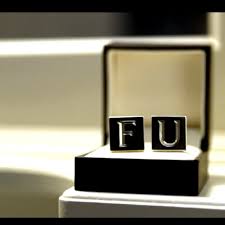
I like to find a graphic before I begin writing and let’s face it – it’s been a while. As Trump dominates the news, what better image than Frank Underwood’s cufflinks from the Netflix series House of Cards? Frank is the cloying sociopath who has wormed his way (with help from his wife, Claire, who is cut from the same cloth) into the highest office in the land – the President of the United States. Sound familiar?
I read an interview today Donald Trump and Narcissistic Personality Disorder – An Interview with Sam Vaknin on American Thinker, an uber conservative blog focusing on national security issues and Israel. Vaknin is a former Israeli citizen who was imprisoned there for fraud and now hangs his hat in Macedonia. He is the author of Malignant Self-Love: Narcissism Revisited. I like to think of Vaknin as the Head Vampire. But then I’m sentimental.
I’ve mentioned Vaknin once before in Barack Obama is a Narcissist and Other Urban Myths. Although this interview cites Vaknin’s numerous academic titles and refers to him as “Dr. Vaknin,” that title was bought via a diploma mill in California. Vaknin is touted as the ultimate authority when it comes to Narcissistic Personality Disorder while the interviewer fails to mention that Vaknin has proclaimed himself a “self-aware narcissist.”
That said, his assessment of Donald Trump, based on way too many hours of watching him on video, is pretty spot on.
Vaknin wonders, in light of Trump’s call to kill the families of terrorists, if there could be something else in play here aside from NPD. Since then, Trump has backtracked and I chalk up a lot of this due to his bombastic style and telling people what they want to hear at any given moment. He turns on a dime.
Should we be more alarmed about the popularity of Donald Trump or his “followers” who are basking in the Idealization Phase? Those who know a thing or two about Narcissistic Personality Disorder know what comes next. And it ain’t pretty.
A Psychologist’s Open Letter Regarding Narcissism August 30, 2015
Posted by alwaysjan in Narcissistic Personality Disorder, Politics.Tags: Donald Trump, Donald Trump is a Narcissist, Healthy Narcissism, Narcissism, Narcissistic Leaders, Narcissistic Personality Disorder, Narcissistic Supply, NPD, Presidential Campaign
4 comments

A friend, who is a therapist, just posted a link to A Psychologist’s Open Letter to U.S. Voters from The Huffington Post. This is definitely worth a read as Dr. Craig Malkin, a Clinical Psychologist and Instructor at the Harvard Medical School, addresses the narcissistic continuum as it pertains to politics. He cautions voters to be wary of what they applaud for as their applause is music aka Narcissistic Supply to the Narcissist’s ears. A very interesting read.
Looking Forward August 26, 2015
Posted by alwaysjan in Narcissistic Personality Disorder, Personal.Tags: Donald Trump Narcissist, Esther the Wonder Pig, Moving On, Narcissism, Narcissistic Personality Disorder, NPD, Retirement
4 comments
I last posted in February just a week before my mother died. She was old and she was ill, so it was not a surprise. But still… Just nine weeks later my husband’s mother died. She, too, was old. But she knew exactly what was going on and was ready to move on. But still…
I assured my students that both of our mothers had long happy lives. To be honest, while I received lovely notes from parents, my students were most affected by the death of our 18-year-old pig, Maisie, last October Maisie was a larger than life pig with a larger than life personality. I still can’t bring myself to scrub the mud off the side door where she’d push her way inside.
And now our 15-year-old dog, Petey, has become a three-legged dog, so he literally has one foot in the grave. There’s another hole to be dug. It’s been quite the year, but don’t we all have years like that? I’m not complaining. It is what it is. It’s called Life. We’ve also had lots of laughs along with the tears.
I’d planned that last year would be my final year of teaching. I loved the kids (okay, most of them), but after 11 years of teaching, I, too, was ready to move on. I take no responsibility that Jon Stewart also decided it was time to jump ship.
So far, (in no particular order), I’ve:
- Cleaned all of the teacher crap out of my car (11 years worth!)
- Started writing about things NOT related to Narcissistic Personality Disorder
- Planted an LA Noir garden of black pansies and black dahlias (Did you know that in Portuguese, pansies are called “Perfect Love?”) Pansies were my mother’s favorite flower.
- Became an Airbnb Superhost with my husband. I like that badge on our photo. It’s not the Purple Heart, but I’ll take it. We have met so many wonderful and interesting people.
- Watched the first season of Poldark.
- Successfully signed up for the ACA aka Obamacare. Whew! Glad to have that option.
- Cooked THREE tortillas español with our guest Ana for a huge paella party before she and Francesco returned to Portugal. Sad face.
- Enjoyed many conversations in español with Francesco. He can now say that people “have issues” and when having a tech problem he says, “I’m no Apple Genius!”
- Discovered the online language program Duolingo and am determined to finally become fluent in Spanish – my husband says he feels like he’s living with a teenager addicted to video games. I highly recommend this program. It’s free! Ding!
- Discovered Michael Connelly’s crime books which are a great way to pass a hot summer night.
- Booked a trip to England to go on a Thelma & Louise road trip with my best friend Lesley through England & Wales.
So, life is good. I haven’t got this all figured out yet, but I’m moving forward. It’s been said you can’t write a new chapter of your life if you’re constantly rereading the last one. That’s my segue to Narcissistic Personality Disorder.
I’ve been tempted to write about NPD, but in the last year I’ve been so lucky to have had so many kind people in my life to help smooth the bumpy ride that I haven’t felt compelled to revisit this topic though I still read voraciously about it.
For a smile each day, I visit Esther the Wonder Pig on Facebook. I find it makes me a better person, as I’m often reminded, “Why would anyone choose to be anything but kind?”
There’s been so much in the news about narcissism. Just google “Donald Trump Narcissist” and you are set with reading for the rest of August. Yes, he is exactly how most people envision a Narcissist. A bragging, brash bully. If you dare to question/cross him, he spews venom. Ugh!
But in reality, most narcissists are small men (yes, there are women too) who are not charismatic leaders. They are legends in their own mind presiding over, no make that lording over, their nearest and dearest. My concern is that although Narcissism is now in the lexicon (unlike when I started blogging), most people envision someone like Trump. Not everyone beats their drum so loudly.
Over the years, I’ve had numerous people send me a photo of the narcissist who darkened their door. They wanted me to see for myself just how drop dead gorgeous this person was. Now you can see, Jan, why I can’t move on?
What I received were photos of the most average looking people you can imagine. This only goes to show how Narcissists are able to swoop in and crop dust with fairy dust. The unsuspecting are still picking fairy dust out of their eyes and hair when the Narcissist’s mask begins to slip. Ahhh, but that’s a story for another post.
Enough about me. I’m hoping all of those reading this have a plan to move forward. Sometimes we take two steps back and then one step forward, but as long as you’re headed in the right direction, there’s hope. Remember, “Why would anyone choose to be anything but kind?” Surround yourself with people who are.
Shall We Play a Game? February 14, 2015
Posted by alwaysjan in Narcissistic Personality Disorder.Tags: Crazy making behavior, Game playing in Relationships, Ludis style, Narcissism, Narcissistic game playing, Narcissistic Personality Disorder, NPD, Playing games, War Games
8 comments

Narcissistic Game Playing is the most frequently viewed post on Planetjan. Perhaps the emotional game of “Tag! You’re it!” and the subsequent chase that is the hallmark of a relationship with a narcissist resonates with readers. Just when you think you are finally IT, the narcissist runs away and expects you to give chase. If you cry out in despair, they will mock you or accuse you of being too needy. You made me run away! Just as it takes two to tango, it takes two to engage in narcissistic game playing. And there is only one way for you to WIN this game.
Those with Narcissistic Personality Disorder (NPD) are the consummate cons and this is how they roll. With such a barren inner life, narcissists derive much pleasure from engaging you, or complete strangers, in games, so they can do what they do best… bluff, evade, and even show you their poker face (though at times you might detect a snicker).
They can balance an endless number of women or “friends” like plates in the air, while giving NONE of them a second thought. They like to keep you guessing and will manufacture scenarios to make you jealous. You will never get the full story from them. There is always a missing piece of the puzzle. They like to feel that they are always in demand though actual demands scare them. Your feelings annoy them. Your attempts to explain your feelings annoy them even more. If you’re like many women, you persist. “Yes, but I am special. Things will be different with me. I can make them change.”
If this sounds at all familiar, it’s time to take off that tinfoil hat. I’m sure you really are a unique and caring person. It’s just that the narcissist doesn’t care about you as a person. In fact it’s your human needs and wants that make it impossible for them to have a relationship with you or anyone. (And yes, people have written to me who swear that “their N” has found happiness with the next person. Appearances can be deceiving. Don’t be fooled again.)
I was recently creating a crossword puzzle for my students online and decided to give it the title Shall We Play a Game? I couldn’t remember if I had the phrase right and ended up googling War Games, the 1983 movie, which starred an incredibly young Matthew Broderick and Ally Sheedy. I hadn’t seen the movie since last century, so I fell down the Wikipedia hole. Bear with me because this explains how to beat the narcissist at his/her own game.
In the movie, Professor Falken is an Artificial Intelligence researcher who designed a “Thermonuclear War Game.” The backdoor password is the name of his dead son, Joshua. and the computer identifies itself as “Joshua.” David (Broderick) is the slacker hacker who inadvertently activates the game when Joshua asks, “Shall we play a game?” It soon becomes clear that this is not a game.
The countdown to WW III begins with David and his friend, Jennifer (Sheedy,) frantically trying to locate Professor Falken. Even after he’s found, all seems lost until Falken and David direct “Joshua” to play tic-tac-toe against itself. This results in a long string of ties, forcing the computer to learn the concept of an unwinnable game. Joshua obtains the missile code, but before launching, it cycles through all the nuclear war scenarios it has devised, finding they too all result in stalemates (“WINNER: NONE”). Joshua concludes that nuclear warfare is “a strange game” in which “the only winning move is not to play.” The computer then offers to play “a nice game of chess,” and relinquishes control of NORAD and the missiles averting nuclear disaster. The only way for you to win this game is NOT to play. Game over. Disaster averted. Life goes on. Upbeat music. Closing credits.
2014 in Review December 29, 2014
Posted by alwaysjan in Blogging, Personal.Tags: Blogging, Personal
2 comments
The WordPress.com stats helper monkeys prepared a 2014 annual report for this blog. Last year the monkeys also used visits to The Louvre as a comparison. I have since donned my beret (bought for me by my friend Lesley in Paris but made in China) and am enjoying a glass of California wine to celebrate. I want to add that the majority of Planetjan’s readers are referred by Google and not Facebook.
Seeing as I only published 14 posts in the last two years (Mais non!), I’m definitely a candidate for the Flogging for Lazy Blogging Award. WordPress has put a positive spin on the fact that my top viewed posts are some of my oldies. (Planetjan Classics!) I’ve been working on writing that is not related to blogging, so I have an excuse from my mother (though it might look a lot like my own handwriting). Sometimes I want to say RIP to NPD but personality disorders still fascinate me and there are still people looking for answers. Au revoir 2014!

Here’s an excerpt:
The Louvre Museum has 8.5 million visitors per year. This blog was viewed about 96,000 times in 2014. If it were an exhibit at the Louvre Museum, it would take about 4 days for that many people to see it.
Downton Abbey Christmas Spoof with George Clooney December 21, 2014
Posted by alwaysjan in Entertainment.Tags: Downton Abbey Christmas Spoof with George Clooney, Downtown Abbey Spoof, George Clooney on Downton Abbey
3 comments
Part 1 What better early Christmas gift than a peek at Christmas Future with George Clooney and the Downton Abbey cast. It seems that Carson likes women’s shoes does he? It’s hilarious and all done for charity. Watch both parts. It’s a gift for Christmas Present since the new season won’t begin in the U.S. until January 2015.
Part 2 Merry Christmas and a Happy New Year!
Downton Abbey: Watch the Hilarious Downton Abbey Cast Spoof Starring George Clooney
When Pigs Fly September 23, 2014
Posted by alwaysjan in Personal, Pets.Tags: Death of a pet, Death of a pig, Personal. Pot Belly Pig
7 comments
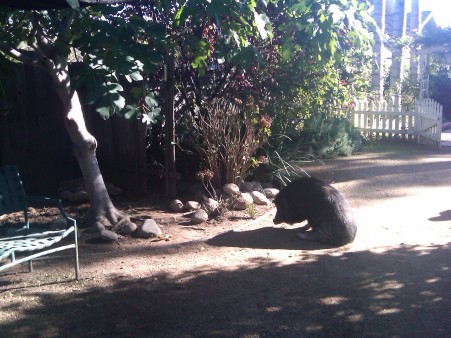
December 1996 -September 2014
Our beloved Maisie is flying at last!
Dogs look up to you, cats look down on you. Give me a pig! He looks you in the eye and treats you as an equal.
Winston Churchill
I’m afraid Halloween just won’t be the same. Check out Halloween for Queen Porcine.
Can A Narcissist Love? July 31, 2014
Posted by alwaysjan in Narcissistic Personality Disorder.Tags: Can a Narcissist love me?, Can a Narcissist Love?, enmeshment, Identifying a narcissist, Red Flags, Relationships
5 comments

Look at me! I can be anything you want…until I tire of the game.
Okay, it’s been ages since I’ve posted, but I’ve been recovering from my second TKR which involved a lot of lounging on the couch and reading stacks of books from this new place I’ve discovered called the public library.
I’ve also spent way too much time on the internet. When my husband tried to get us a better phone plan, the guy asked him if he had a teenager in the house. “Someone in your house is downloading a LOT of data!” he announced ominously. Now I’m worried I might be grounded!
I’ve come across several articles about Narcissism that resonated with me. I’m so over the media blitz equating taking a selfie with being a narcissist. It’s proof that there IS such a thing as bad publicity, as it’s misleading the public about a very real personality disorder – Narcissistic Personality Disorder (NPD).
On Huffpost’s The Blog, I came across a great piece by Melissa Schenker, Can A Narcissist Love Me? I love it when I read other people’s writing and find myself impressed with how clearly they identify behaviors, which were once to me almost impossible to describe, let alone fathom.
At the bottom is a link to the book Sweet Relief From the Everyday Narcissist written by Ms. Schenker and Tina Moody available on Amazon. It’s also available via Kindle for $9.99. Hit “Look Inside” and scroll down to the Table of Contents and click on each chapter to read extended excerpts. “Most problems you experience with a narcissist hark back to the fact that in his or her subconscious conception of the world, he does not know that you exist as an individual.” Just reading the excerpts was a fresh breath of air, so I’m putting this on my Must Read list.
The Dark Triad vs. The Dark Tetrad Personality February 12, 2014
Posted by alwaysjan in Narcissistic Personality Disorder.Tags: Dark Tetrad, Dark Triad, Internet Trolls, Narcissistic Personality Disorder, NPD, Psychopathy, Sadism
23 comments
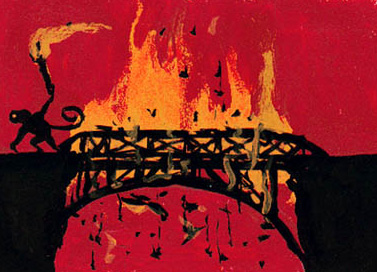
I first wrote about the Dark Triad of personality traits in 2009 in Why Bad Guys Really Do Get the Most Girls. Unfortunately, the post, which was linked to New Scientist, has since been blocked so that only those with a subscription can view the article in its entirety. Sad face.
Today, I read an article on CNN about how Online Trolls are Internet Sadists. These are the people who write anonymous provocative comments online crafted to antagonize and upset, and they rate highly in Dark Tetrad personality characteristics. My first reaction was that someone needed to use Spellcheck. I’m familiar with The Dark Triad: Narcissism, Machivellianism, and psychopathy. These three traits together form an unchecked malignancy of the human core. But wait, there’s more! The missing, until now, red-headed stepchild is Sadism. And The Dark Triad + Sadism equals The Dark Tetrad. Shudder.
I urge you to read Everyday Sadism – Throwing Light on the Dark Triad, published by the Association for Psychological Science.
I’ve written mostly about Narcissistic Personality Disorder (NPD), which I’ve often referred to as Baby Bear with Anti-Social Behavior being Mama Bear and Big Bad Daddy being Psychopathy. Both Sociopaths and Psychopaths show high levels of narcissism.
The Narcissist who darkened my door made several comments/gestures that in the light of day seem down right sadistic. I think we often think of narcissists as blundering bufoons who go through life like bulls in the china shop unaware of the effect they have on others. It’s like they don’t know any better. Or do they? Food for thought.
Image: This one goes WAY back to Mark, a blogger who went on to write for the blog, The Critical Thinker. He’s been off my radar for too long.
Narcissistic Game Playing – Part 2 January 6, 2014
Posted by alwaysjan in Narcissistic Personality Disorder.Tags: Afraid of Commitment., Games Narcissists Play, Ludic Love, Ludus, Narcissism, Narcissistic Personality Disorder, Serial Cheaters
8 comments

Narcissistic Game Playing, which described the Ludic love style, has been one of the most read posts on my blog, as so many with Narcissistic Personality Disorder fall into this category. Last night I came across more information on the Ludus-style love that really resonated with me. Cue fanfare. And so I bring you Part 2! Originally this post featured information from a website I tracked back to a California Polytechnic State University site. as of 2016, this is no longer posted online per a contact at Cal Poly. So I’m adding a graphic for the Six love styles instead HERE. It’s full size and all of the “good stuff” is on the far right. (In this case the “good stuff” is actually the “bad stuff.”)
LUDUS (Self-centered Game Player) “The ideal constructed type of ludic lover is that of a person who “plays” love affairs as he or she plays games or puzzles – to win, to get the greatest rewards for the least cost. A ludic lover hates dependency, either in himself/herself or in others. This type shies away from commitment of any sort (does not like lovers to take him or her for granted). The ludic lover enjoys strategies, and may keep two or three or even four lovers “on the string” at one time. A ludic lover may even create a fictional lover to discourage a real one’s hopes for a permanent relationship. He or she avoids long range plans and is careful not to date the same person often enough to create the illusion of a stable relationship.
A ludic lover would rather find a new sex partner than to work out sexual problems with an old one. And yet, he or she may suddenly show up for a replay, even years later, with birthday flowers, a bottle of a favorite wine, a sentimental Valentine, or a record of a favorite song, and vanish just as suddenly. A ludic lover usually enjoys love affairs, and hence rarely regrets them unless the threat of commitment of dependency becomes too great. Dates with a ludic person are never dull, even though they may not happen with great regularity. He or she is never possessive or jealous. The ludic lover usually has good self concept, and usually is assured of current success in love as well as most other areas.
Unlike a pragmatic lover, a ludic lover never reveals all of himself or herself or demands such revelation by partners. Ludic lovers are not likely to be very sophisticated sexually. As a rule, they have only one sexual routine; if the sex partner is not pleased by the ludic lover’s sexual pattern, then the ludic one simply finds another partner rather than attempting to improve an unsatisfying relationship. If she does not like his sexual behavior, the ludic man moves on to someone who does; if he does not get an erection or bring her to orgasm on his own (with no help from her), the ludic woman looks for a man who will. Sex is self-centered and may be exploitative rather than symbolic of a relationship. A ludic lover does not listen to (or take time for) feedback that suggests commitment, which is “scary.” A ludic lover may not even want to be his or her partner’s best sex partner because that might necessitate commitment or dependency that would be “awful.”
Physical appearance of the partner is less important than other qualities, such as self-sufficiency and lack of demanding behavior to ludic persons.” This description SO nails the Narcissist who darkened my door. Even though “Joe” was a Cerebral Narcissist, he had many women in play (“my girlfriends”) but always kept them at arm’s length. I observed this first hand and it all had a “wheeling and dealing” aspect to it that he enjoyed enormously. Half the time, he couldn’t remember who he’d told what. But then a narcissist can deny he/she ever said anything.
And yes, several friends who’ve recovered from their Close Encounter with a Narcissist reported that the N reappeared out of nowhere via a Christmas email. Holiday trolling is common as the N wants to see if he can drop a line and still get a bite. What was funny was that one N sent out a Christmas email and neglected to hide the names of all the women he was sending it to! Ouch! Image Credit: “Mind Games” clipart from Discoveryeducation.com
I, Narcissist Slayer January 3, 2014
Posted by alwaysjan in Narcissistic Personality Disorder.Tags: Narcissist Slayer Award, Narcissistic Personality Disorder, NPD
6 comments

Thank you CZBZ at the Narcissistic Continuum for conferring on me the title of Narcissist Slayer. That definitely looks like me on a good hair day. And what’s that I’m holding – my award or a rocket launcher? I’ll be eagerly awaiting the arrival of my sword. What? No sword included? Can you tell I’m eagerly awaiting the return of Game of Thrones?
I imagine meeting up with the other slayers to share a bracing adult beverage before returning to wield our pens in the fight against this nefarious personality disorder and debunking the myths that surround it.
As is the case with these blogger awards, there are guidelines, or as we say in third grade, multiple-step directions. These are:
1. Thank the person who nominated you and link back to them
2. Put the award’s logo on your blog
3. Write a blog post and share the blog(s) you have chosen. There are no minimum or maximum number of blogs required.
4. Inform nominees on their site
5. Share one positive thing you took away from your relationship with a narcissist.
First things first. Neither of my parents were narcissists. When I first saw a therapist (himself the adult child of a narcissist), that’s the first thing he asked me. He explained this was because only those who’d been conditioned since childhood could/would put up with narcissistic abuse over the long run. For me, it was all of four months until the D&D – not a long period in the grand scheme of things. But the damage done to my psyche was devastating. So if I wasn’t conditioned by my childhood, what was it that drew me to the flame, even once those red flags were waving?
Looking back, it was the fantasy and belief that this person who was alternately flirting/hurting me could be helped. He needed me. Now that seems narcissistic just to write that, but it’s true. Some have described narcissists as “puppies with rabies.” I’m a dog person and had to be bitten repeatedly to get the message. I learned that ultimately, the only person we can fix is ourself/or how we respond to those events that swirl around us which we call life.
Finally, the best thing of all is that by sharing my own Close Encounter with a Narcissist on my blog (which was very scary at first – I’ve been had!), I’ve met so many amazing people, both women and men, who were looking for information. Their comments, insights, and friendship mean the world to me – and that includes you CZ.
Always, Jan
Breaking Bad Blues December 24, 2013
Posted by alwaysjan in Entertainment, Popular Culture.Tags: Breaking Bad Blues, Breaking Bad Christmas Card, Getting On, Quotes from Breaking Bad, The Returned, What to watch after Breaking Bad
6 comments
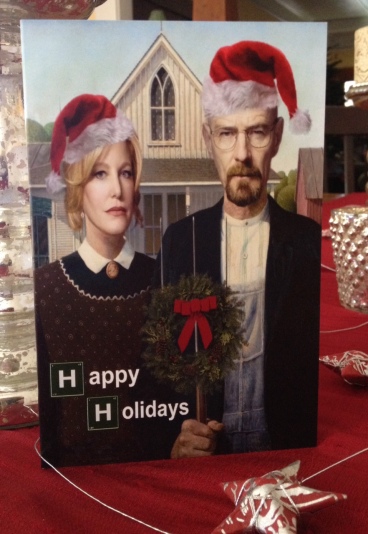
Happy Holidays from The Whites by Paul Gitto at redbubble.
The seasonal malaise started early. I’m not talking about Christmas, but the Season 5 finale of Breaking Bad on Sept. 29th.
After teaching third graders all day and having to repeatedly remind them to sit “criss cross applesauce,” I so enjoy watching TV shows that prominently feature the alphabet – as in V for Violence, L for Language, and S for Sexual Situations. I like to think of it as a yin yang kinda thing, so the end of my five-year escape to the dark side with Walter White and Jesse has me down.
I was stepping out to buy more butter for making cookies this morning when I found this card in my mailbox. It had been hand delivered by a friend who for the longest time couldn’t fathom my interest in watching Breaking Bad.
“How do you reconcile the fact that he’s a drug dealer?” she asked. I could only shrug. She has since binge watched all five seasons and had a dazed look after the finale. Whoa! What a ride!
I’d thought about posting something nostalgic as it IS Christmas, but when it’s in the 80s in SoCal, it’s so not a Love Actually scenario. In the interest of trying to view the glass of eggnog as half full…
When I was in the UK over the summer, everyone was all aflutter watching The Returned, a French series (Les Revenants), but it was only available via Channel 4. Think of it as a French Twin Peaks. I was excited to see that The Returned began airing on the Sundance Channel in October and highly recommend it.
My husband and I have also been watching Getting On on HBO, which is based on a British series with the same name. It took me two episodes to fully embrace the show, but now it’s a must see.
That said, none of the above series feature a sidekick who can use the word “bitch” with the regularity and conviction of Jesse Pinkman. Sad face. If you’ll never look at the Periodic Table of Elements again in the same way, then here’s a holiday gift for you.
Click HERE to read the 60 most memorable quotes from Breaking Bad.
Breaking Bad-ify Your Name September 2, 2013
Posted by alwaysjan in Entertainment, Popular Culture.Tags: All bad things must come to an end, Allbadthingsmustcometoanend, Bad-ify Your name, Badify Your Name, Breaking Bad, Breaking Bad Names, Making your name like Breaking Bad Credits, Name like Breaking Bad Credits, Name like on Breaking Bad
5 comments
Watching Breaking Bad is one of my guilty pleasures. It helps that it’s on Sunday night because come Monday, I go into G-rated teacher mode and get to hear who had a visit from the Tooth Fairy.
I remember when Walter White was just a schlubby high school chemistry teacher and his star student, Jesse Pinkman, had an unlined face. Time flies when you’re having fun/or on the run. What an amazing ride! And what fun to watch Bryan Cranston, who I best remember rollerskating on Malcom in the Middle, undergo his own professional development. (I had to throw in some teacher talk.) On KROQ radio the other morning, they played Aaron Paul’s audition tape for the the role of Jesse. It was so much fun to listen to Jesse’s innocent voice.
So it’s with some nostalgia that I watch the final season. Today, my friend Buddy put up his name on Facebook, so it looks like the Breaking Bad credits. I’m not going to use his name, nor mine, but it’s easy for you to do. Go to Breaking Bad-ify Your Name and find the Name Lab Facebook App (which will then “cook” your name.) You can only do this to the name you’re registered under on Facebook and can then either download a cover or profile pic. Dang! I’d hoped to Bad-ify my blog Planetjan and even make a cool name tag for my door for Back to School Night. I’m afraid those ideas have now gone up in smoke.
You know it’s occurred to me that I usually sign my name with a double M. MM.
Turn that upside down and you’ve got WW. Serendipity?
If you haven’t watched the show, boy what a binge-watch you have in store.
The TSA Searched My Hair July 30, 2013
Posted by alwaysjan in Travel.Tags: Humor, Searching Hair, Travel, Travel Experiences, TSA, TSA searching hair
5 comments

Oh, the joys of travel.
Over Spring Break, I flew back to Detroit and environs to see my mother, who’d recently moved closer to my brother. He asked me to run my flight options by him as it’s an hour’s drive to the airport. The flight I’d bookmarked worked fine. So far, so good.
But when I got to LAX, the Delta kiosk spit out my credit card and refused to issue a boarding pass. It directed me to “See an agent.” I got in line and shuffled along with my bag. Finally, it was my turn. I pulled out all the trip itinerary I’d printed out from my computer. The woman looked confused. “Where’s the paper with the confirmation number?” she asked. She checked her computer and then I heard the dreaded words. “You don’t seem to have actually purchased a ticket.”
I remember crying with disbelief. Could I really be so stupid? And of course, the answer was yes! I had bookmarked but neglected to confirm and pay for my $340 ticket! But, the agent informed me that I was in luck. Although this flight was sold out, there was one seat left on the next flight. And it was only going to cost $1300. “But I could fly to London for that!” I cried.
“Only one seat left,” she reminded me, “so you have to decide now if you want it.” I tearfully handed her my credit card.
Now on the plus side, I got a seat in First Class. When the flight attendant brought out a basket of candy bars, I couldn’t believe they were free. I had told the guy sitting next to me my tale of woe and he ventured, “I actually think that might be the most expensive Milky Way you’ve ever eaten.” Ouch! When the basket-lady came round again, I, the basket-case, grabbed three more to get my money’s worth. I’m a clever one.
I’m going to skip over losing my keys at the airport for fear it could reactivate my PTSD. And yes, why did I take my keys with me on vacation? My son would locate these two days later at the TSA’s Lost and Found office manned by the world’s most disgruntled employee. But I digress. Did I mention that I had to be driven straight from LAX to Urgent Care as I’d developed a full-blown ear infection and had to be back at school the next day? But those are just Bonus Features.
Now what you’ve been waiting for – my hair. No sooner had I gone through the Security “Assume the Position” Screener in Detroit then I was asked to step aside. “We need to search your hair,” the TSA woman said matter-of-factly. Huh? Okay, my hair tends to look like a native shrub, but I’d just had it cut for the trip. It’s not like anyone would mistake me for Angela Davis or Marge Simpson.
I was so stunned at this request that all I could do was laugh as the woman proceeded to massage my head. (It’s not the same with gloved hands.) I told her I had a bit of bed head in the back and asked if she could fix that. I couldn’t stop laughing.
When I told my students the next day what had happened, one boy suggested that I could have had a machine gun in my hair. “Really?” I asked incredulously. “Well, maybe a miniature one?” he offered. I made a mental note that I needed to reteach measurement and probability.
Rest assured that even when my hair is in the air, you can fly with peace of mind.
Drawing by Eli
Not A Leg to Stand On June 15, 2013
Posted by alwaysjan in Health, Personal.Tags: Health, Knee Pain, Strawberry Festival, Torn Meniscus, Total Knee Replacement
12 comments
 I’ve gone and done it again.
When I last wrote about my knee in 28 Days Later, I was four weeks out from Total Knee Replacement (TKR). I’m pleased to say that at six weeks, I no longer wanted to die. And just as my doctor had predicted, by the time I hit that 12-week mark, I was in love with him.
I went back to school after 10 weeks, as I’d exhausted my sick leave and was on Extended Medical Leave (1/2 pay). I was a little bit nervous about my ability to navigate the stairs, but ultimately I did just fine. And it took me all of 10 minutes to regain control of my classroom after being out for so long. It was all good. Too good?
Okay, my right knee now makes a THUNKing sound (which is good way to teach about onomatopoeia?). I asked my doctor about this and he said, “Well, your knee is all titanium and plastic, so what do you expect?” It’s not like it was in Silent Running mode before. Point well taken.
I was floating up and down the stairs at school. Heaven! Then my LEFT knee began acting up. A shot of Cortisone did the trick. My husband had tickets to go to The Strawberry Festival in Yosemite to meet up with his best friend from kindergarten, Anne. I love Anne because she remembers more about my husband’s childhood than he does. Approximately 20 some odd people were to converge at Camp Calamity. Oh, how aptly named.
Neither my husband or I had ever been to Yosemite. Finally, we were going. Oh what fun we would have.
The first night was great. The camp was set up so that there was a long table for all of us to gather. The women’s restroom wasn’t too far. Who could ask for anything more? Okay, the ground was uneven, but our hosts had laid out artificial turf and rugs so that it was the ultimate outdoor space. They had this down as they’d been doing this for 31 years. I was in awe of just how organized they were. We slept the first night on an air mattress. Oh, what a difference it made. This was going to be fun. (I’d never uttered the words “camping” and “fun” in the same sentence before.)
The second day we got in Anne’s car and she drove us to Hetch Hetchy. We walked down the road and across the dam and through the tunnel. I couldn’t believe how easily I could walk. I hadn’t walked this far in years and kept waiting to be in pain – but I was fine.
When we got back to Camp Calamity we dined and then as the sun began to set, we set off to the Music Meadow. The paths are traced with white chalk, so it’s easier to walk. We hadn’t gone far when I stepped off the path. My left knee twisted as I slid into a hole. I would have fallen to the ground if the two guys walking next to me had not grabbed me. The pain was exquisite. So I was carried me back to Camp Calamity. I was laid out on a chaise lounge and someone made me a wicked Margarita. My husband, Richard, soldiered on to the Music Meadow. When he returned, I was immobilized and had to be carried to the tent. Not a good sign.
I’ll cut to the chase. We drove back to Los Angeles the next morning as I had to have people carry me to the restroom. Talk about humility. I was wheeled into the hospital ER where it was determined that I had no broken bones. My entire leg was encased in a knee immobilizer and I was sent home with pain meds.
The hardest thing was writing to my students’ parents that I’d injured my OTHER knee. I was out for four days while awaiting the results of an MRI. Meanwhile, our collection of crutches was ever expanding.
The MRI showed a torn meniscus, a Baker’s cyst, and some arthritis, but I was given the okay to go back to school. I managed for two days and then everything went south. By the last day of school when I had to clean out my classroom, I was limping and in excruciating pain.
I finally met with my doctor. I now have arthroscopic surgery scheduled, but he couldn’t fit me in before my trip to the UK, which was to be my reward for having the TKR. I had this same surgery on my right knee in 2006 which compared to the TKR was a piece of cake.
So I’m hobbling. I have been ordered NOT to pivot. I ice my knee three times a day and try to keep it elevated. This was not the summer vacation I envisioned. I’ve warned my Lesley/s in the UK that I might not be up to doing the Highland Fling. I might have to just be put in a wheelbarrow and taken to the local pub?
So if my readers wonder why I’ve been errant in posting, it’s because I’ve been waylaid once again. At least this has made it impossible to put my foot in my mouth. I, however, choose to see the glass as half full. Cheers!
Photo Credit: Drawing by Daniel
My Friend is Married to a Narcissist – To Tell or Not May 12, 2013
Posted by alwaysjan in Narcissistic Personality Disorder.Tags: Emotionally Abusive Relationships, Health, Narcissism, Narcissistic Personality Disorder, NPD, Warning People about Narcissists
46 comments
I had to laugh when I saw this. It’s available through Zazzle.
I’m afraid I’ve been hunkered down in the trenches at school, so it’s been a while since I’ve posted. But, this week a discussion started up about the wisdom of telling a friend that they’re married to a narcissist.
Some of my regular commenters dished up a serving of humble pie and some things to consider before you speak the truth. As someone who’s been known to put both feet in my mouth, I can appreciate their reluctance to say yah or nay before you take this very big step.
When someone is involved with any emotional abuser (whether he/she be a narcissist or not), especially during the Idealization Phase, that adrenaline rush, the feeling that this person is The One, my soulmate, is overpowering. There can be a zillion Red Flags a flyin’, but the person will just put on their rose-tinted glasses, so those Red Flags fade into the background. Any mention of the N’s faults or quirky/odd behaviors will usually be explained away. The person “in love” with the N is telling you what they’ve been told. They want so badly to believe this is real. Even if the situation is clearly dodgy, they’re often convinced that contrary to all that’s happened before, they are the exception to the rule. Their love will cure all. If only.
One commenter last year had a neighbor whose husband fit the bill. There were children involved and she knew this woman’s life was miserable. But what to do? Talk to her face to face? Leave an article about narcissism in her mailbox?
Let’s face it. Most of us don’t appreciate unsolicited advice, no matter how well intended. Even when someone is telling us the truth, our natural inclination is to become defensive. We perceive the advice as a judgement, an intrusion. How dare someone presume to tell us what’s going on in OUR life! And what do you know about this disorder? Since when are you an authority? I think you might actually be the one with the problem!
I do believe in many cases the person you’re telling already knows that the person they are with is damaged. Something is amiss. But they’ve been living in denial, often because they can think of no alternative or are reliving a dysfunctional childhood dynamic. It might be ugly, but it’s familiar.
So, let’s say you DO tell someone they’ve been sharing their bed with a no-good narcissist. If you think their eyes are going to light up and they’ll say, “OMG, that’s it! That explains so much. Thank you for figuring out what’s wrong with my life. Now, I’m off to call a divorce attorney. Can you watch the kids while I start packing?,” I’m afraid you’ll be disappointed.
More likely than not, you’ll be told to mind your own business.”You know your life isn’t so perfect either?” You can expect to be shut out of this person’s life altogether. More likely, they’ll shoot the messenger and bury you in a shallow grave after they delete you as a facebook friend.
Maybe though, you’ve planted a seed? Maybe after your friend/neighbor calms down, they’ll google narcissism? Maybe. But don’t count on it.
I wouldn’t have the same trepidation telling someone new on the scene that a certain someone is bad news. Of course, it helps if you don’t appear to be speaking as the jilted ex. I believe if you speak from a place of honesty and wisdom, it is possible to “warn” someone. Whether that warning will be heeded is anyone’s guess, but at least you tried.
On some level, I believe those who’ve had a Close Encounter with a Narcissist want to spare others the pain. Sometimes it’s for selfish reasons. We really are afraid that the Narcissist will find happiness with someone else, but of course, this is only an illusion. We’ve seen through the Narcissist’s bag of tricks and want to expose them for who they really are/aren’t. I realize it’s natural to want to warn others, but at the same time you want to avoid looking like the crazy one. It’s a fine line to walk.
If you see a child playing on the train tracks and the headlights of an oncoming train, do you hesitate? In this instance, I do think we have a moral obligation to speak the truth as we know it. The results might not be what we expected, but we at least we were true to ourselves.
If you’re reading this, I’m curious as to whether anyone DID say anything to you. If not, what could someone have said that might have helped? Or maybe nothing anyone said could have changed the course of what was to come next. You had to learn the hard way.
Thoughts?
Parents in Denial March 12, 2013
Posted by alwaysjan in Parenting, Teaching.Tags: Difficult Parents, Education, Humor, Parents in Denial, Teaching, Third Grade, What Teachers Really Want to Tell Parents
7 comments

Saturday morning I woke up with my stomach churning over a conversation I’d had with a parent after school. No harsh words were exchanged (unlike my first year of teaching when a parent flipped me off in front of a class of second graders), but the parent looked at me incredulously when I said her child was still having the same issues as he had on Day One. Another Parent in Denial
But there’s something I need to come clean about. Before I became a teacher 10 years ago, I, too, was a bonafide Parent in Denial. If only I’d been a teacher before I became a parent, I wouldn’t have been such a pushover when it came to my sons’ lame-o excuses. My boys were angels! So any teacher who tried to tell me otherwise was obviously not used to dealing with a creative genius or a real boy.
How bad was I? When my younger son was accused of throwing an apple across the lunch area outside and hitting the custodian in the head, I insisted that it couldn’t have been him because I’d seen him throw in Little League and his aim wasn’t that good! And I believed this with all my heart.
The “apple” incident was just one of many. There were phone calls. Meetings with tribunals of teachers. Suspensions. Sometimes the police were involved.
My sons are now 30 and 26 and they are decent, hardworking young men whom I’m now very proud of. So, imagine when several years ago my accused “apple thrower” blurted out, “Mom, you know all that stuff they said I did in middle and high school?…well, I did it all.”
By then I was teaching and I had to hang my head with shame. To think I had been THAT parent. Not always, but there were a couple of rough years when I’d questioned a teacher’s motivation, competence, and even demanded that my son be changed to another class. Because of me, there were some teachers who woke up on Saturday morning with their stomachs churning. Karma?
A colleague posted What Teachers Really Want to Tell Parents on Facebook. It was just what I needed to read on Saturday morning. At a time when the average new teacher leaves the profession after only 4.5 years and “parent disrespect” is cited as one of the leading reasons, I think this is timely indeed. Read it and see what you think.
28 Days Later – After Total Knee Replacement Surgery January 20, 2013
Posted by alwaysjan in Health, Personal.Tags: Gratitude, Health, Humor, Knee Replacement Recovery Time, Total Knee Replacement
16 comments
I’ve never gone so long without writing a new blog post, but then I didn’t know that Santa was bringing me a new knee for Christmas. Nothing says Merry Christmas like jingle bells on a walker. Ho Ho NO!
Six years ago when I had arthroscopic surgery on my right knee for a torn meniscus, the surgeon informed me that I had the knee of an 80-year-old woman. I was considered too young for joint replacement, so the “conservative” measures began. A strap on knee brace that made me look robotic. I saw the look on a student’s face when they got a glimpse of it one day under my skirt and ended up doing my own Show and Tell. The kids thought it was pretty cool. But, in reality, it was hot and itchy since it was all synthetic. Then there were Cortisone injections that did nothing. And for two years, I worked with a personal trainer to strengthen the muscles around my damaged kneecap. I was on prescription meds, but the doctor worried that ultimately they could damage my liver. “Geez, if I’m going to blow out my liver, I could just do that with alcohol,” I said. The doctor nodded sympathetically.
Meanwhile the two flights of stairs at my old school loomed. Up and down a dozen times a day. Some days people asked if I was limping. A peg leg was beginning to seem like a viable option. My last option was an injection of an organic substance made from chicken combs (I’m not naming names). It was worth a shot (no pun intended). Oh, the jokes about whether I would sprout feathers or lay an egg. But a week later, the pain had only grown worse.
On a walking field trip to the nearby bookstore, I winced and hobbled. I resorted to doing my Lamaze breathing. One of the oh-so-nice parents asked delicately, “Are your wearing new shoes?” By the time we arrived at the bookstore, I had to sit down. If I was a boxer, I would have been down for the count. Later I hobbled back to the school and then home to book a sub. That was the end of November.
I went to see a new surgeon. He thought I was one of the less than 1 percent who have an allergic reaction to the chicken combs. Great. But, when he said he could do the surgery just before Christmas it was music to my ears. He pulled no punches, “For the first 12 weeks you’re going to hate me, but after that….you’re going to LOVE me!”
So, it’s been a month now. The three days in the hospital were doable as the IV painkillers did their job and you’ve gotta love those nurses. I was even visited by a volunteer with “Happy” the therapy dog. But then it was time to go home. The night before I was released my husband returned to find boxes lined up on our front porch. Enough equipment to start a convalescent home. Hey it’s three seats in one – a chair, a commode AND you can sit in the shower in it! Oh the look of horror on my husband’s face. “I’m no nurse,” he said proclaiming what has always been obvious. It was seeing me using a walker that unnerved him the most. When after a week I finally decided I needed to get my hair cut, he drove me up to the side door, let me out, then sped away so no one would see him with me.
Each morning I settled in for the day on the couch with my leg in the CPM (Continuous Passive Motion) machine. Our dog, Layla, didn’t appreciate losing her el primo spot on the couch to this whirring machine. I’d hoped to read, but mostly I laid in a zombified state while my knee went through the spin cycle. My husband, Richard, is an amazing cook so I was served breakfast each morning with the admonishment, “You better not get used to this!”
I don’t know how people manage to go through this operation who have a family who expects them to soldier on. I literally did nothing but watch movies and read. I followed comments on my blog. Friends texted daily. My husband usually works at home upstairs, so if I needed something, he was only a text away. He cooked three incredible meals a day.
Initially a physical therapist came to the house. After the first visit she informed me I’d need ice next time – and not for drinks. After two weeks I graduated to outpatient therapy. I actually drove to my first appointment, feeling like I was finally out amongst the living.
It’s now 28 days later. The guy hauled away the CPM, so Layla has reclaimed her spot on the couch. Last Thursday the physical therapist kicked my butt. He had me on my belly with something like a dog leash attached to my ankle that I had to pull on to raise my leg behind me. S&M. That day I told him my new nickname for him was “The Mangler.”
“If you don’t climb the mountain, you can’t see the view” is a quote I often tell my students, so I shall continue to claw my way up the mountain rock by rock even on days when gaining a foothold seems almost impossible. I can’t complain. I have insurance and I’m in pain because I’m getting better not worse. I’ve done the math. I should be “in love” by St. Patrick’s Day though I have to go back to work before then. I’ll have to settle for being “in like”.
So for this and all my family and friends who’ve been there for me, I am so grateful. Santa may have brought me a new knee, but he also brought me a new appreciation for all that is truly important in my life. Happy New Year!
To find out what came next, read Not A Leg to Stand On.
Drawing by Colby


 planetjan
Comments Welcome August 6, 2013
Posted by alwaysjan in Blogging, Narcissistic Personality Disorder, Uncategorized.Tags: Blogging, Comment Policy, Comments, Narcissistic Personality Disorder, NPD
8 comments
I just noticed that I have over 2,000 comments in response to 219 blog posts. It’s no secret that the majority of comments are in response to my writing about Narcissistic Personality Disorder (NPD). Eliminating cursive writing from the curriculum doesn’t generate the emotional response as having discovered the person you thought you were in love with isn’t capable of love.
So, in honor of all of those who’ve shared their stories of the turmoil wrought by a close encounter with a narcissist, I thought it was worth commenting about comments. Your comments.
I’m a teacher by trade, not a therapist. I provide a listening ear. I’m a survivor. And ultimately, I’m an optimist. Sound good? You’ve come to the right place.
It’s interesting because in the summer of 2012, we had quite a lively discussion going on between commenters. I was on vacation and was so impressed with how everyone was so thoughtful in their responses and kind to one another. I was beginning to feel like I wasn’t even needed! However, when someone said, “Wow! This is a great forum!” I winced. I don’t need nor want the responsibility of monitoring a forum.
That said, I have a lot of people who stop by regularly to let people know how they’re doing. Or to offer solace and a pat on the back to someone else who’s still reeling from their involvement with a narcissist. Some of these people go back to Year 1 of my blog. They’re like old familiar friends and I’m amazed at how wise they’ve become. I’ve watched them work through the “What ifs” and WTFs and move on with their lives. This brings me joy.
I always try to respond to NPD-related comments within 24 hours. I remember how horrible I felt when I realized who/what I was dealing with. I’d been “had” and who would believe me?
But, here’s the deal. I hit the Edit button and write my comment on the bottom of the actual comment in italics. I do this because I don’t want to see my face appearing in the sidebar over and over again. The downside of this is when people sign up to Follow Comments, they don’t receive a notification that I’ve replied. They won’t receive a notification until another person comments on that post.
FYI: I must approve everyone’s first comment. Once that’s done, future comments are posted automatically, but I receive a notification. Just in case. Only twice have I had to delete that first comment to block a flurry of rants that followed. I don’t like rants. Rants make my stomach churn. After a long day at school spent with 30 third graders, I don’t have much patience for adults who behave like bratty children.
When someone comments, I can see their email address. Maybe half a dozen times when someone was in severe distress, I emailed them to let them know I’d responded to their comment. I also eliminate most people’s last names from their comment. Just in case.
And yes, there are a few readers who I’ve allowed to contact me “off blog.” It’s amazing how most people’s writing voice so echoes their real one. So it was no great surprise that when I met up with Lesley, my most prolific commenter, in Scotland last month, she was just as warm and clever and wise as she was “on blog.” I also talked to Phil while in the UK and his sardonic wit was spot on as well. It’s funny, because we have so much more to talk about than NPD now. Life has a strange way of moving on. Believe it or not, but you will not always feel like this experience is consuming/has consumed you. The future awaits.
Readers can usually learn more from the comments than they can from reading my posts. So read up. And thank you for commenting!
Always, Jan
Typeface for Comments is BigHouse.